

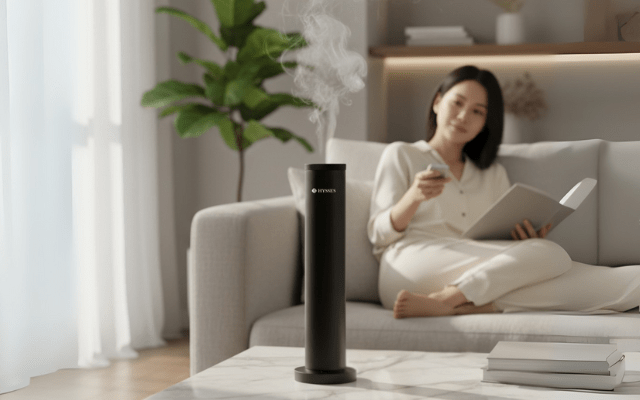
Reviewed and formulated with insights from global aromatherapy authorities and HYSSES product specialists.
In today’s fast-paced world, finding moments of calm can feel like a luxury. Aromatherapy offers a natural path to peace - improving mood, air quality, and emotional balance. Among its many tools, the aroma nebuliser stands out as one of the most effective methods to enjoy pure essential oils.
Unlike ultrasonic diffusers that rely on water or heat, a nebuliser transforms pure essential oils into a fine mist without altering their structure. This allows you to experience each drop in its full therapeutic form, ideal for enhancing focus during work hours or creating a tranquil sanctuary at home.
What Is an Aroma Nebuliser?
An aroma nebuliser is a waterless diffuser that atomises essential oils into microscopic particles, releasing them directly into the air. Because it operates without heat or dilution, the oils maintain their aromatic integrity, producing a cleaner, richer scent.
This makes nebulisers perfect for humid climates like Singapore, where water-based diffusers can encourage mould or weaken scent intensity. As aromatherapy pioneer Robert Tisserand notes, “Nebulisation preserves the natural chemistry of essential oils for maximum benefit.” (Tisserand & Young, Essential Oil Safety, 2014)
Setting Up Your HYSSES Aroma Nebuliser
Step 1: Assemble the Components
Fit the glass oil chamber, base, and diffuser top securely following the manufacturer’s guide. Handle glass parts carefully to avoid breakage.
Step 2: Add Essential Oils
Add 10–15 drops of pure essential oil directly into the glass chamber, no water or carrier oils. HYSSES nebulisers are designed specifically for undiluted use.
Step 3: Position Correctly
Place the nebuliser on a flat, stable surface at about eye level, away from walls, vents, or electronics for even scent distribution.
“Diffusion works best in open, breathable spaces where air circulation enhances aroma without dilution.” - Dr. Daniel Pénoël, Natural Aromatherapy Medicine (2019)
How to Use a Nebuliser Effectively
Choosing the Right Essential Oils
Your chosen oils set the tone - energising, calming, or purifying. Always opt for therapeutic-grade, 100% pure essential oils for the best results.
Aromatherapy Blends for Common Needs
Focus & Productivity
- 5 drops Peppermint
- 5 drops Lemon
- 3 drops Bergamot
Diffuse 20–30 minutes to enhance alertness and clarity.
“Citrus and mint oils stimulate the prefrontal cortex, improving concentration.” - Dr. Alan Hirsch, Smell and the Human Response (2018)
Relaxation & Better Sleep
- 6 drops Lavender
- 4 drops Frankincense
- 3 drops Ylang Ylang
Diffuse 30 minutes before bedtime for restful sleep.
“Lavender and ylang ylang are among the most researched oils for improving sleep quality.” - PubMed Central, 2020
Cleansing & Freshness
- 5 drops Eucalyptus
- 5 drops Lemongrass
- 3 drops Tea Tree
Diffuse intermittently to purify air and refresh surroundings.
“Eucalyptus and lemongrass have natural antimicrobial and deodorising properties.” - Dr. Jean Valnet, The Practice of Aromatherapy (1982)
Timing, Duration & Placement
Diffuse Intermittently: Run for 15–30 minutes, then rest for an hour to avoid olfactory fatigue. Continuous operation may dull the senses and overwork the motor.
“Short-term inhalation influences the limbic system without overexposure.” - International Journal of Aromatherapy, 2019
Positioning Tips:
- Keep at eye level and 30 cm from walls or furniture.
- Avoid placing near fans or air conditioners.
-
For even scent throw, use near gentle airflow (but not direct vents).
Common Mistakes to Avoid
- Using carrier oils - they cause clogging.
- Running for hours - leads to desensitisation.
- Ignoring cleaning - alters scent and damages glass.
- Poor placement - reduces diffusion effectiveness.
“Essential oils oxidise when left for long periods. Regular cleaning preserves both scent and safety.” - Tisserand Institute, 2022
Cleaning & Maintenance
After Each Use:
- Empty leftover oil.
- Wipe gently with a soft cloth.
-
Store in a cool, dry place.
Weekly Deep Clean:
- Mix equal parts HYSSES Nebuliser Cleaning Solution and distilled water.
- Run the nebuliser for 5–10 minutes.
- Rinse thoroughly and air dry.
“Regular cleaning prevents buildup and maintains optimal diffusion.” - Journal of Environmental Health Research, 2020
Servicing & Safety
Inspect monthly for cracks, sticky residue, or discolouration. Replace worn parts and avoid DIY repairs to protect airflow balance.
“Preventive maintenance ensures steady diffusion and scent purity.” - Aromatherapy Science Review, 2022
Safety Tips:
- Keep out of reach of children and pets.
- Avoid flames and heat sources.
- Store oils in cool, dark places.
- Those with respiratory issues should consult a physician before use.
“Proper oil storage and cautious diffusion ensure both safety and efficacy.” - WFEOA, 2023
Advanced Aromatherapy Blends
Uplifting Mood & Energy
- 4 drops Sweet Orange
- 3 drops Grapefruit
- 3 drops Lime
Diffuse for 20 minutes to boost positivity and vitality.
“Citrus oils stimulate dopamine and serotonin, improving mood.” - Dr. Elaine Perry, Newcastle University, 2019
Immunity & Respiratory Wellness
- 4 drops Eucalyptus
- 3 drops Tea Tree
-
3 drops Lemon
Diffuse 15–20 minutes to support breathing and air purification.
“Eucalyptus and tea tree neutralise airborne pathogens.” - Journal of Applied Microbiology, 2020
Aromatherapy for Everyday Stress
Before Sleep:
- 3 drops Lavender
- 2 drops Ylang Ylang
-
1 drop Sweet Orange
Diffuse or apply (in Jojoba oil) to wrists and temples before bed.
“Scents access the brain’s emotional core, supporting deep relaxation.” - Dr. Rachel Herz, Harvard Health Publishing, 2023
Midday Stress Relief (Work Focus):
- 3 drops Bergamot
- 2 drops Peppermint
-
2 drops Frankincense
Diffuse during work hours to uplift mood and concentration.
“Bergamot combined with mint reduces stress and sharpens focus.” - Dr. Josh Axe, Natural Medicine Insights, 2023
Evening Emotional Reset:
- 3 drops Geranium
- 2 drops Patchouli
-
1 drop Sandalwood
Add to a warm bath or carrier oil for emotional balance.
Aromatherapy for Family Calm
For Parents (Evening Unwind):
- 3 drops Lavender
- 2 drops Bergamot
-
1 drop Cedarwood
Diffuse to lower stress and restore calm.
For Children (Bedtime Spray):
- 3 drops Chamomile
- 2 drops Mandarin
-
1 drop Lavender
Mix into 50 ml distilled water. Mist lightly before bedtime.
For Shared Spaces:
- 3 drops Geranium
- 3 drops Sweet Orange
- 2 drops Frankincense
Use in reed diffuser to promote harmony and positivity.
“Balanced floral-citrus blends encourage emotional harmony at home.” - Tisserand Institute, 2024
Aromatherapy Beyond Home
Workplace Calm: Peppermint, Lemon, Rosemary blend for clarity and energy.
Commute Relief: Lavender, Bergamot, and Frankincense in a roll-on to ease tension.
Social Confidence: Ylang Ylang, Patchouli, and Sweet Orange in Rice Bran oil for comfort and composure.
Key Takeaways
- Nebulisers offer the purest form of aromatherapy, requiring no water or heat.
- Use short diffusion cycles to maintain sensitivity and efficiency.
- Clean weekly to prevent oxidation and preserve scent quality.
- Tailor blends to emotional and physical needs - from focus to relaxation.
-
With the right routine, a nebuliser transforms your space into a natural wellness sanctuary.
Shop the Collection:
Nebulisers deliver the purest aromatherapy experience by diffusing undiluted essential oils directly into the air - no heat, no water, just nature in its most potent form. With mindful usage, proper cleaning, and carefully curated blends, your HYSSES Aroma Nebuliser transforms everyday moments into therapeutic rituals of wellness.
If you’re new to nebulising, explore our Comprehensive Guide to Nebulisers to understand how they differ from ultrasonic diffusers and why they’re ideal for Singapore’s climate.
Want to ensure your chosen essential oils are safe for this method? Discover our detailed list of Oils Unsuitable for Nebuliser Diffusers: What to Avoid before your next blend.
And if you’re exploring which model fits your lifestyle best, read the HYSSES Nebuliser: A Review of Features and Benefits for a full comparison of design, material, and performance.
With each mindful breath, aromatherapy becomes more than scent - it becomes serenity, science, and self-care, woven together through nature’s purest form.
Frequently Asked Questions (FAQs)
1. Can I use carrier oils or blends with a base in my nebuliser?
No. Carrier oils are too dense and can clog the glass chamber. Nebulisers are designed for pure essential oils only. For diluted applications, use them in roll-ons or massage blends instead.
Reference: Tisserand & Young, Essential Oil Safety, 2014.
2. How often should I clean my nebuliser?
Light cleaning after every use and a deep clean once a week is ideal. This prevents oil residue buildup that can block the atomiser. Use a blend of distilled water and the HYSSES Nebuliser Cleaning Solution for the best results.
Reference: Journal of Environmental Health Research, 2020.
3. What are the best essential oils for boosting focus and productivity?
Peppermint, Lemon, and Bergamot are excellent for stimulating alertness and improving mental clarity. Diffuse intermittently (15–30 minutes) to refresh focus without overwhelming the senses.
Reference: Dr. Alan Hirsch, Smell and the Human Response, 2018.
4. Why does my nebuliser seem less fragrant over time?
This may happen due to oil oxidation, poor cleaning, or running continuously without breaks. Short diffusion cycles preserve scent intensity and protect the device.
Reference: Tisserand Institute, 2022.
5. Is nebulisation safe for pets and children?
Yes, when used cautiously. Always diffuse in well-ventilated spaces and use milder oils like Lavender, Chamomile, or Mandarin. Avoid direct exposure or diffusion in confined areas.
Reference: WFEOA (World Federation of Essential Oils Associations), 2023.
Disclaimer
This guide is intended for educational and informational purposes only. It should not replace medical or professional advice. Always consult a healthcare provider before using essential oils for therapeutic or medical concerns. Product results may vary depending on individual health, environment, and usage conditions.
HYSSES essential oils and nebulisers are produced under strict quality control using 100% natural, therapeutic-grade ingredients.
Last updated: October 2025
References
- Tisserand, R., & Young, R. (2014). Essential Oil Safety: A Guide for Health Care Professionals. Elsevier.
-
Valnet, J. (1982). The Practice of Aromatherapy. C.W. Daniel.
-
Hirsch, A. (2018). Smell and the Human Response. Journal of Sensory Studies.
-
Herz, R. (2023). “How Scents Affect the Brain.” Harvard Health Publishing.
-
Perry, E. (2019). “Citrus Oils and Mood Regulation.” Newcastle University Press.
-
Journal of Applied Microbiology. (2020). “Airborne Pathogen Neutralisation through Essential Oils.”
-
Journal of Environmental Health Research. (2020). “Maintenance of Aromatherapy Devices: Microbial Impact Assessment.”
-
Tisserand Institute. (2022). “Oxidation in Essential Oils: Prevention and Impact.”
-
WFEOA. (2023). “Global Safety Guidelines for Aromatherapy Use.”
-
International Journal of Aromatherapy. (2019). “Olfactory Fatigue and Short-Term Inhalation Effects.”
- Dr. Josh Axe. (2023). Natural Medicine Insights: Essential Oils and Focus.

Share:
Meadow Muse
Christmas Gift Guide