

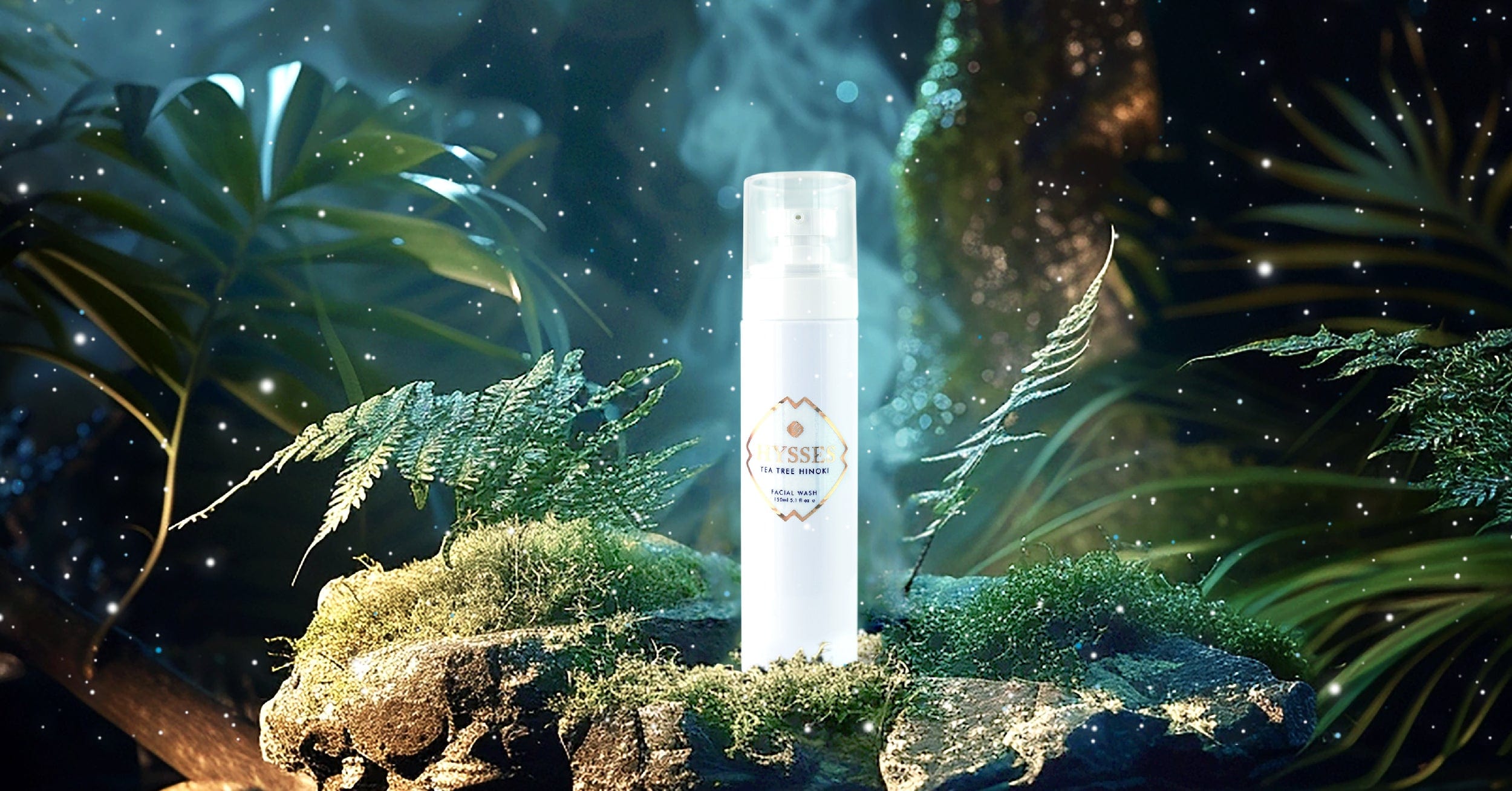
Oily and acne-prone skin is often misunderstood. Many people assume that stronger cleansers will remove excess oil and prevent breakouts faster. However, dermatological research consistently shows that over-cleansing can weaken the skin barrier and increase sebum rebound.
At HYSSES, we approach skincare through aromatic science and botanical balance, not aggression. A well-formulated facial wash using carefully selected essential oils can help purify the skin while maintaining its natural protective barrier.
As Cheryl Gan, Founder and Managing Director of HYSSES, explains:
“The goal of cleansing is not to strip the skin, but to restore harmony between purification and protection.”
Understanding Oily and Acne-Prone Skin
Sebum is essential for healthy skin. It protects against environmental damage and prevents dehydration. However, when produced in excess, it can combine with dead skin cells and clog pores.
Common contributing factors include:
-
Hormonal fluctuations
-
Genetics
-
Stress and lifestyle
-
Environmental humidity
-
Harsh skincare products
A clogged pore environment may encourage the growth of acne-associated bacteria, leading to inflammation.
A review according to Nakamura, M., et al. (2017), highlights that acne is fundamentally an inflammatory condition linked to barrier dysfunction and microbial imbalance.
Why Gentle Cleansing Is More Effective
Many cleansers designed for oily skin create a “tight” feeling, but this is often a sign of over-stripping the skin barrier.
Research shows that disrupting the skin barrier can increase:
-
Sebum overproduction
-
Sensitivity and redness
-
Inflammatory acne lesions
A study according to Infante, V. H. P., et al. (2021), in Skin Pharmacology and Physiology confirms that maintaining barrier integrity is essential for reducing inflammation and improving overall skin health.
Gentle cleansing helps to:
-
Preserve natural lipids
-
Maintain microbiome balance
-
Reduce irritation triggers
-
Support long-term oil regulation
Essential Oils for Oily and Acne-Prone Skin (HYSSES Formulations)
At HYSSES, we formulate with carefully selected essential oils known for both functional skincare benefits and aromatic wellness.
-
Tea Tree Essential Oil (Melaleuca alternifolia)
Tea Tree is one of the most studied natural ingredients for acne-prone skin.
According to Hammer, K. A. (2015),Tea Tree oil demonstrates antibacterial and anti-inflammatory activity, helping reduce acne lesions with fewer side effects than harsh synthetic treatments.
It helps:
-
Reduce acne-causing bacteria
-
Calm inflammation
-
Purify congested skin
Explore Essential Oils Collection.
-
Geranium Essential Oil
Geranium is valued for its balancing effect on sebum production.
Its naturally floral-green aroma supports emotional balance while helping maintain skin equilibrium - especially for combination and oily skin types.
-
Chamomile Essential Oil
Chamomile is widely recognised for its calming and anti-inflammatory properties.
It is especially beneficial for acne-prone skin that is also sensitive or easily irritated.
-
Patchouli Essential Oil
Patchouli supports skin regeneration and helps improve the appearance of uneven skin texture.
Its grounding aroma also supports emotional calmness during skincare rituals.
-
Frankincense Essential Oil
Frankincense is known for its skin-rejuvenating and toning properties.
It's traditionally used in skin healing and inflammation reduction.
-
Hinoki Essential Oil
Hinoki offers a fresh woody aroma traditionally used in Japanese bathing rituals.
It is valued for its purifying and calming effect on both skin and senses.
Aromatherapy Blends for Skin Balance
HYSSES formulations often combine essential oils to enhance both skin function and sensory experience:
-
Tea Tree + Geranium → clarifying and balancing
-
Chamomile + Frankincense → calming and restorative
-
Patchouli + Hinoki → grounding and purifying
These blends support a holistic cleansing ritual rather than a purely cosmetic function.
Ingredients to Avoid in Oily Skin Care
Even natural skin care can become counterproductive if poorly formulated.
Avoid products with:
-
Harsh sulphates (SLS/SLES)
-
High alcohol concentration
-
Synthetic fragrance overload
-
Overly occlusive mineral oils in acne-prone skin
As aromatherapy expert Robert Tisserand notes:
“Dilution and formulation are key - essential oils must always be used responsibly to avoid skin sensitisation.”
How to Build a Gentle Cleansing Routine
Morning Routine
-
Cleanse with a gentle botanical facial wash
-
Apply lightweight hydration
-
Protect with SPF
Evening Routine
-
Remove impurities gently
-
Cleanse without scrubbing
-
Restore skin moisture barrier
Additional care tips:
-
Wash pillowcases regularly
-
Avoid touching the face frequently
-
Clean mobile devices often
-
Use lukewarm water only
Lifestyle & Skin Connection
Skin health is closely linked to internal balance.
Aromatherapy supports this mind-skin connection by:
-
Reducing stress response
-
Supporting emotional balance
-
Enhancing skincare mindfulness
Ready to give your skin the balance it’s been searching for?
Explore the power of gentle aromatherapy cleansing with HYSSES - where Tea Tree, Chamomile, Geranium, Patchouli, Frankincense, and Hinoki work in harmony to purify, calm, and restore your skin without stripping its natural barrier.
Discover your ideal facial care ritual today and experience skincare that goes beyond cleansing, it becomes a moment of calm, clarity, and care.
Shop the HYSSES Facial Wash Collection and start your skin’s gentle transformation now.
Frequently Asked Questions (FAQs)
1. Is Tea Tree oil safe for acne-prone skin?
Yes. Studies show Tea Tree oil has antimicrobial properties that may help reduce acne when properly formulated and diluted.
2. Can essential oils replace acne medication?
No. They can support skincare routines but should not replace medical treatments for severe acne.
3. Why does oily skin still need moisturiser?
Hydration prevents the skin from overproducing oil to compensate for dryness.
4. Is Chamomile suitable for sensitive acne-prone skin?
Yes. Chamomile is widely recognised for its calming and anti-inflammatory properties.
5. Can stress affect acne?
Yes. Research from Harvard Health shows stress can worsen inflammatory skin conditions.
Disclaimer
This article is intended for educational and informational purposes only and is not a substitute for professional medical advice, diagnosis, or treatment.

Share:
Aromatherapy in Facial Care: The Benefits of Essential Oils in Facial Wash
Why Hand Cream Is Essential for Daily Skin Care