

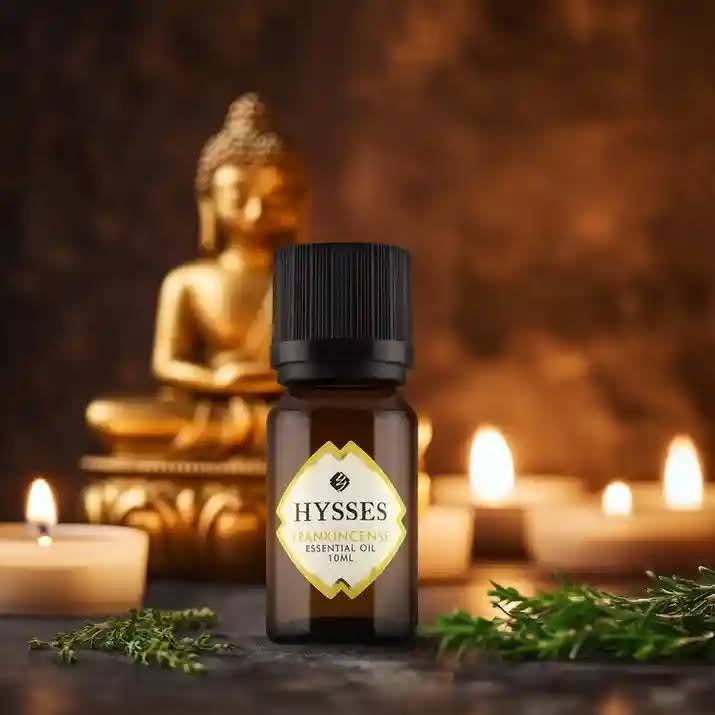
Some of the most meaningful rituals do not begin with a complicated routine. They begin with a pause.
Before the notifications, conversations and responsibilities of the day begin, there is often a quiet moment when all you have to do is sit, breathe and notice. For many people, meditation creates that space. Adding scent can make the experience even more sensory, turning a simple breathing practice into a ritual that engages both mind and body.
But what is the connection between essential oils and meditation? Can a particular scent actually help you settle into a practice, or is aromatherapy simply another wellness accessory?
The answer is more nuanced. Essential oils cannot replace meditation, and no fragrance can guarantee a particular mental or emotional state. However, scent can become a consistent sensory cue that helps you transition into a slower, more intentional moment.
At HYSSES, aromatherapy is rooted in this relationship between nature, scent and mindful living. From single-note essential oils to carefully formulated blends, the collection offers different aromatic profiles that can become part of personal wellness rituals.
Explore the HYSSES Essential Oils Collection
The Relationship Between Scent, Mindfulness and Meditation
The relationship between fragrance and contemplative practices is not new. Aromatic plants, woods, resins and incense have been incorporated into cultural and spiritual rituals for centuries.
Modern aromatherapy approaches this relationship from a different perspective, using concentrated plant extracts to create a sensory environment. When you inhale an aroma, scent molecules interact with the olfactory system, which is closely connected with areas of the brain involved in emotion and memory.
That connection may help explain why a particular scent can suddenly remind you of a place, person or moment.
Meditation, meanwhile, involves intentionally directing attention, often towards the breath, bodily sensations or a chosen object of focus. Combining the two creates an interesting sensory ritual: the breath becomes the practice, while scent can become one of the cues that brings attention back to the present.
HYSSES describes this relationship through the idea that aromatherapy can help create a more mindful connection between body and breath. As Cheryl Gan, Founder of HYSSES, puts it:
“When aroma connects with breath, the body listens.”
The important distinction is that scent does not need to do the meditation for you. Instead, it can help create an environment in which you consciously slow down, breathe and become more aware of the moment.
Why Scent Can Become a Powerful Meditation Cue
One reason scent works particularly well as part of a ritual is its connection with memory and emotion.
Think about how quickly a familiar fragrance can transport you somewhere. The smell of a particular flower may remind you of a garden. A woody aroma may recall a quiet retreat. A citrus scent may bring to mind a bright morning.
When the same aroma is repeatedly experienced alongside a particular activity, it can become associated with that activity.
This does not mean that an essential oil automatically "trains the nervous system" or guarantees a meditative state. Rather, repetition can help create a familiar sensory transition.
For example, you might:
-
Dim the lights.
-
Prepare your meditation space.
-
Use a familiar essential oil aroma.
-
Sit comfortably.
-
Take several slow breaths.
-
Begin your meditation.
Over time, the sequence itself can become a signal that it is time to move from activity into stillness.
This idea of making scent part of a consistent ritual also appears in HYSSES' own guidance on incorporating aromatherapy into yoga and meditation.
Choosing Essential Oils for Meditation
There is no single "best essential oil for meditation". Your choice depends on the atmosphere you want to create and, just as importantly, which aromas you personally enjoy.
For a Grounding Ritual
If you prefer deeper, warmer aromas, consider woody or resinous essential oils.
Sandalwood, Frankincense and Cedarwood are often associated with grounding, reflective scent profiles. HYSSES' current Essential Oils collection includes Frankincense and Cedarwood alongside a wide range of single-note oils.
Explore HYSSES Single-Note Essential Oils
These scents can work particularly well when your meditation ritual is centred around slowing down, journaling or quiet reflection.
For a Calmer Atmosphere
Lavender is one of the most widely studied essential oils in aromatherapy research. Several systematic reviews have found evidence that lavender aromatherapy may help reduce anxiety, although researchers also note limitations in the available evidence and the need for further high-quality research.
This makes Lavender an interesting option when you want your meditation space to feel soft and restful.
Discover HYSSES Lavender Essential Oil
For a Fresh, Focused Ritual
If you find yourself feeling mentally scattered before meditation, you may prefer fresher aromatic profiles such as Peppermint, Lemon or Rosemary.
HYSSES' meditation and yoga guidance highlights oils such as Rosemary, Peppermint and Lemon for a more refreshing sensory experience, while Lavender, Frankincense and Sandalwood are presented as options for calmer, more grounding environments.
The goal, however, is not to choose an oil because it promises a particular result. Choose a scent that feels pleasant and appropriate for the kind of environment you want to create.
How to Use Essential Oils During Meditation
There are several ways to introduce aromatherapy into a meditation practice.
1. Diffuse Before You Begin
Diffusion is one of the simplest approaches.
Rather than making the scent overpowering, allow a subtle aroma to become part of the environment before you sit down. HYSSES recommends using a diffuser or nebuliser as part of its yoga and meditation aromatherapy guidance.
The purpose is to create a gentle sensory atmosphere rather than fill the room with an intense fragrance.
Explore HYSSES Diffusing Devices
2. Make Scent Part of Your Pre-Meditation Ritual
You can also make scent part of the transition into meditation.
For example:
Prepare → diffuse → sit → breathe → meditate.
Repeating this sequence can make the preparation itself feel intentional.
You might use the same aroma each morning for several weeks and observe whether you begin to associate it with the beginning of your practice.
3. Use a Personal Aromatherapy Method Carefully
Some people prefer a more personal approach, such as applying a properly diluted essential oil blend to the wrists or using a scented cloth nearby.
However, essential oils are highly concentrated and should not generally be applied directly to the skin undiluted.
HYSSES advises diluting essential oils with a suitable carrier oil before topical use and recommends patch testing before wider application.
Learn More About HYSSES Essential Oil Use and Safety
4. Use Scent as an Anchor
Once meditation begins, your attention will wander. That is normal.
Instead of becoming frustrated, you can gently return to your chosen object of attention, such as your breath.
If a subtle scent remains present in the background, you can occasionally notice it as another sensory experience before returning your attention to the breath.
The intention is not to concentrate intensely on the fragrance. It is simply another way to become aware of the present moment.
The Power of Consistency Over Complexity
A meditation ritual does not need to involve ten different oils, an elaborate diffuser setup and a perfectly decorated room.
In fact, simplicity can make the practice easier to maintain.
Choose one or two scents that you genuinely enjoy. Use them consistently. Give yourself a few minutes to transition into the practice.
This reflects a broader principle in aromatherapy: the ritual matters as much as the product.
HYSSES' approach to aromatherapy similarly positions essential oils as part of everyday self-care rituals rather than something that needs to be complicated. Its current collection includes single-note oils, Remedies blends, Chakra oils and diffusing products, allowing users to build rituals around different preferences and intentions.
Explore HYSSES Remedies Essential Oil Blends
A Simple 10-Minute Meditation and Aromatherapy Ritual
If you are new to combining essential oils with meditation, start simply.
Step 1: Prepare Your Space
Find somewhere comfortable and relatively quiet. Put your phone aside and remove unnecessary distractions.
Step 2: Choose Your Aroma
Select an essential oil according to the atmosphere you want to create. Lavender can offer a softer floral profile, while Frankincense, Sandalwood or Cedarwood can provide a deeper, woody character.
Step 3: Introduce the Scent
Use a diffuser according to its instructions and keep the aroma subtle. You do not need a strong fragrance for it to become part of the experience.
Step 4: Sit and Breathe
Close your eyes if comfortable and take a few natural breaths.
Notice the physical sensations of breathing rather than trying to force your mind to become completely quiet.
Step 5: Return Gently
When your attention wanders, acknowledge it and return to the breath.
If you notice the aroma, simply notice it. There is no need to analyse whether the oil is "working".
Step 6: End Slowly
When your meditation is complete, take a moment before immediately returning to your phone or daily tasks.
Notice how you feel and, if you wish, record the scent you used and how the ritual felt.
Over time, this simple journal can help you understand which aromas you naturally gravitate towards.
Essential Oil Safety During Meditation
Because meditation can involve prolonged exposure to a scent, more is not necessarily better.
Essential oils are highly concentrated. HYSSES recommends responsible use, including dilution for topical application, patch testing and appropriate storage.
Keep these precautions in mind:
-
Do not ingest essential oils unless specifically directed by a qualified healthcare professional and the product is intended for that purpose.
-
Dilute oils before topical application.
-
Patch test a diluted topical preparation before wider use.
-
Avoid contact with the eyes.
-
Keep essential oils away from children and pets.
-
Use appropriate caution with citrus oils, particularly when applying them to the skin before sun exposure.
-
Stop using an oil if you experience irritation, discomfort or sensitivity.
-
If you are pregnant, breastfeeding, have a medical condition or take medication, consult an appropriate healthcare professional before using essential oils therapeutically.
HYSSES also recommends storing essential oils in dark glass bottles and away from heat and direct sunlight to help protect their quality.
When Scent Becomes Part of the Practice
The most interesting part of combining essential oils with meditation may not be the fragrance itself.
It is the relationship you gradually build with the ritual.
Perhaps Lavender becomes the scent you reach for during an evening meditation. Perhaps Frankincense becomes associated with your Sunday morning reflection. Maybe a bright citrus aroma becomes part of a short midday breathing practice.
Eventually, the scent can become a reminder: pause here. Breathe here. Be present here.
That does not mean the oil is responsible for the meditation experience. You are.
The essential oil simply becomes part of the environment you have intentionally created.
Building Your HYSSES Aromatherapy Ritual
There is no single way to create a meditation ritual with HYSSES.
If you prefer single botanical aromas, explore the HYSSES Single-Note Essential Oils collection and experiment with different scent families.
If you prefer ready-made aromatic combinations, the HYSSES Remedies Collection offers blends designed around different wellness intentions, including calming, relaxing, balancing and mental-fatigue-focused options.
You can also explore HYSSES' existing guidance on using essential oils for yoga and meditation for more ideas on incorporating scent into mindful movement and breathwork.
Read HYSSES' Guide to Essential Oils for Yoga and Meditation
The objective is not to build the most elaborate routine. It is to create one that you will actually return to.
Final Thoughts: Let Stillness Lead the Way
The relationship between essential oils and meditation is ultimately a relationship between scent, attention and ritual.
Meditation asks us to slow down and notice. Aromatherapy invites the senses into that experience.
Used thoughtfully, an essential oil can become more than something that simply makes a room smell beautiful. It can become part of a personal ritual that marks the transition from doing to being, from noise to quiet and from constant movement to a few intentional breaths.
And perhaps that is where the real value lies.
Not in expecting a bottle of essential oil to create stillness for us, but in using scent as a gentle reminder to create the space for stillness ourselves.
As Cheryl Gan explains, “When aroma connects with breath, the body listens.”
Sometimes, the ritual begins with nothing more complicated than that: one breath, one scent and a moment to simply be.
Frequently Asked Questions
1. Can essential oils help with meditation?
Essential oils can become part of a meditation environment and may serve as a sensory cue for focusing attention. Research on individual oils, particularly lavender, suggests potential effects on anxiety and relaxation, although essential oils should not be treated as a replacement for meditation or medical care.
2. What essential oils are good for meditation?
The best oil depends on your preferred scent and the atmosphere you want to create. Lavender, Frankincense, Sandalwood and Cedarwood are suitable choices for people who enjoy softer or grounding aromas, while Peppermint, Lemon and Rosemary offer fresher profiles.
3. Should I diffuse essential oils while meditating?
Yes, diffusion can be a simple way to introduce aroma into your meditation environment. Keep the scent subtle rather than overwhelming, and always follow the instructions for your diffuser or nebuliser.
4. Can I apply essential oil directly to my skin before meditation?
Pure essential oils are highly concentrated and should generally be diluted with an appropriate carrier oil before topical application. HYSSES recommends patch testing before regular use.
5. How can I create a consistent aromatherapy meditation routine?
Start small. Choose one scent, use it consistently before meditation, keep your routine simple and observe how you respond over time. The goal is to create a familiar ritual rather than rely on a particular oil to produce a specific emotional state.
Disclaimer
This article is intended for general educational and lifestyle purposes only. Aromatherapy and essential oils are not substitutes for professional medical diagnosis, treatment or advice. Individual responses to essential oils vary. Always follow product-specific instructions, use essential oils responsibly and consult a qualified healthcare professional when appropriate, particularly if you are pregnant, breastfeeding, managing a medical condition or taking medication.
References
HYSSES. How to Elevate Yoga and Meditation Practice with Essential Oils.
Read the HYSSES article
HYSSES. The Ultimate Guide to Essential Oils.
Read the HYSSES Essential Oils Guide
HYSSES. Essential Oils Collection.
Explore the HYSSES Essential Oils Collection
HYSSES. Remedies Essential Oil Blends.
Explore HYSSES Remedies
HYSSES. Remedies, Calming — Essential Oil Safety and Usage Guidance.
View HYSSES usage guidance
HYSSES. Remedies, Revitalising — Essential Oil Usage and Storage Guidance.
View HYSSES product guidance
Fu, C. Y., et al. How Strong is the Evidence for the Anxiolytic Efficacy of Lavender? Systematic Review and Meta-analysis of Randomized Controlled Trials.
View the study on PubMed
Lillehei, A. S., & Halcon, L. L. A Systematic Review of the Effect of Inhaled Lavender on Sleep.
For further research into lavender aromatherapy and wellbeing, consult peer-reviewed literature through PubMed.

Share:
Corporate Christmas Gift Ideas Employees Will Actually Like
Corporate Christmas Gift Ideas Employees Will Actually Like