

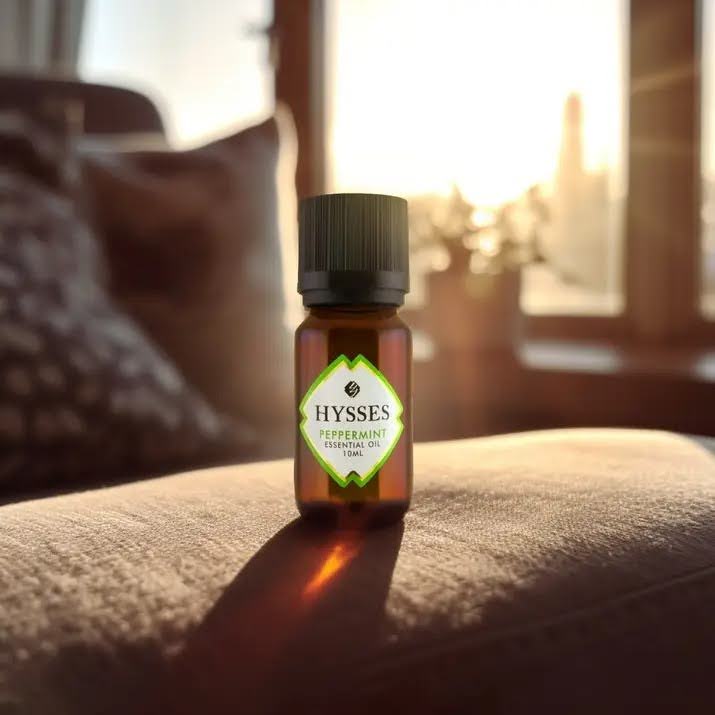
Open a bottle of peppermint essential oil and the effect is immediate. The scent is cool, sharp and sweetly minty, a bright flash of freshness that cuts through a heavy room like a window thrown open. It is one of the most recognisable aromas in the world, and one of the easiest to get wrong, because a little goes a very long way.
This guide is about getting it right. It covers what peppermint essential oil is, what it smells like, how it blends, and how to diffuse it with confidence, from reading the label to choosing the device. It is a scent-and-atmosphere guide, written for anyone who wants their home to feel crisp and awake. For more practical aromatherapy reading, the HYSSES Discovery Blog is a good place to keep exploring.
Why Home Scent Is on Everyone's Mind This Season
The 2026 haze season, indoors
With more time spent indoors during the 2026 haze season, people are paying closer attention to how their homes smell. Windows stay shut, air-conditioning runs for longer, and rooms can start to feel closed-in. It is a natural moment to think about scent and atmosphere.
It helps to be clear about what scent can and cannot do. A fragrance changes how a room smells. It does not clean the air. For the situation itself and the official guidance, follow the National Environment Agency (NEA), which advises using the 1-hour PM2.5 reading for immediate activities and the 24-hour PSI forecast for planning ahead. Both are available on the NEA haze microsite.
The clear-day version
You do not need a haze warning to want a fresher home. A bright, minty scent is one of the most popular ways to make a space feel crisp, whether it is a humid afternoon, a kitchen after cooking or a home office at the end of a long day. Peppermint is often the first oil people reach for, which is exactly why it deserves a proper introduction.
What Is Peppermint Essential Oil?
The plant and the extraction
Peppermint is a perennial herb that belongs to the mint family, Lamiaceae. Botanically it is Mentha piperita, and you may see it written as Mentha × piperita on some labels and in references such as Kew's Plants of the World Online. It is a natural hybrid, a cross between watermint (Mentha aquatica) and spearmint (Mentha spicata), which explains why its scent sits somewhere between the two, only cooler and sharper.
Peppermint essential oil is a concentrated aromatic liquid taken from the leaves. The usual method is steam distillation: fresh or lightly dried leaves go into a still, steam passes through them and carries the aromatic molecules upward, and as the steam cools, the oil separates from the water and is collected. It takes a large amount of leaf to make a small amount of oil, which is part of why peppermint essential oil is so potent and should always be measured sparingly.
What the label should show
A good label tells you exactly what is in the bottle. Before you buy any peppermint essential oil, check for:
-
The plant name: the Latin botanical name, such as Mentha piperita.
-
The extraction method: for example, steam distilled.
-
The country of origin: so you know where the plant was grown and distilled.
-
The bottle size: so you can judge how long it will last.
-
Usage and caution notes: clear directions and warnings from the maker.
The National Association for Holistic Aromatherapy (NAHA) encourages buyers to look for this kind of transparency. Cheryl Gan, Founder and Managing Director of HYSSES, has spoken about why it matters: "The world of aromatherapy is largely unexplored and unregulated." A clear label is your first line of reassurance.
The aroma in plain terms
Peppermint smells cool first, then sharp, then sweet. The opening is an icy, almost crackling freshness. Behind it comes a clean, camphor-like edge, and underneath sits a gentle sweetness that keeps the scent from feeling harsh, like a fresh mint leaf rubbed between your fingers. HYSSES places its Peppermint Essential Oil in the floral and camphorous scent family, with a moderate intensity and a top-to-medium volatility, so it is noticed quickly and then settles into the room.
A quick note on scope: this guide covers scent and diffusing only. If you are searching for peppermint in health or wellness terms, you will not find that here. For the wider profile of the plant, the Peppermint guide in Essential Oil 101 is the place to start.
What Peppermint Smells Like and How It Blends
Peppermint has a bright accent. On its own it is bold and single-minded, and that is its limit as well as its charm. Blended, it becomes more rounded, more interesting and easier to live with day to day. As Cheryl Gan puts it, "True aromatherapy lies in synergy", the idea that each oil in a blend should complement the others, as explained in the HYSSES guide to blending natural scents. Peppermint is a perfect example of that principle. Three partners stand out, and each works for a clear scent reason.
Peppermint and ginger
Ginger essential oil is warm, spicy and gently sweet, with a little woodiness underneath. Peppermint is cool and sharp. Put them together and you get a contrast: warm against cool, spice against mint, each making the other more vivid. Ginger essential oil rounds off peppermint's sharp edge, and peppermint lifts ginger so it never feels heavy. HYSSES has already blended the pair, using steam-distilled ginger from India and steam-distilled peppermint from the USA, as the ginger and peppermint essential oil blend. Its scent profile is herbal and spicy, with a strong intensity, so a restrained hand works best.
Peppermint and eucalyptus
Both oils are cool and camphor-like, so they amplify each other. Together they smell clean, open and very fresh, a good choice when you want a room to feel airy. Because both are strong, begin with small amounts and add slowly. For more on eucalyptus itself, see our [eucalyptus essential oil guide]([Article 3 URL]).
Peppermint and lemon
Lemon is bright, sparkling and citrusy, and it softens peppermint's cool edge with a sunny lift. The result smells like a freshly cleaned kitchen. A few drops of Lemon Essential Oil alongside peppermint suit kitchens, entryways and living rooms, where you want a welcoming first impression.
If you are curious how ginger essential oil behaves on its own, its supporting role here is simple: it warms peppermint without dulling it. If you would like to see complete blends compared side by side, our four-blend comparison walks through them in detail. If herbal scents interest you, our rosemary essential oil guide is a natural next read. You can also browse the full Essential Oils Collection.
Ways to Use Peppermint for Home Scent
The use of peppermint in the home is simple, and this section keeps to scent and atmosphere. There are three easy routes.
In a diffuser
A peppermint oil diffuser is the most popular option for steady, controllable scent. An ultrasonic water mist diffuser, such as the HYSSES Ultrasonic Water Mist, Dome, turns the oil into a fine mist that drifts softly through the room. It gives a lighter, background scent that suits everyday living spaces.
In a nebuliser
A nebuliser uses no water and no heat. The Nebuliser, Hermiz delivers undiluted oil as fine droplets, so the scent is stronger and carries further. That makes it a good fit for larger or open-plan rooms, though peppermint is bold enough that a nebuliser rewards a light touch.
As a room spray
A peppermint room spray needs no device at all. One spritz freshens the air in seconds, perfect before guests arrive or after cooking. The Peppermint Room Scent is made with steam-distilled peppermint from the USA and comes in a 165ml bottle. Spray it directly into the air, keep it away from open flames, and avoid spraying near or above plastic, lacquered wood or painted surfaces. If it lands on one, wipe it straight away. Browse more options in the Room Scent Sprays collection.
Which rooms suit a bright scent?
Peppermint is crisp and lively, so it suits spaces where you want a clean, alert feeling:
-
The home office: a bright, tidy backdrop for desk time.
-
The kitchen: a clean, minty note that works well after cooking.
-
The entryway: a fresh, welcoming first impression for you and your guests.
Because peppermint is energetic, it is a better daytime scent than an evening one, so keep gentler oils for the bedroom and wind-down hours.
Diffusing Peppermint: Label First
Diffusing is easy once you build the habit of reading before pouring. Peppermint is a strong oil, so the details matter more than you might expect.
How many drops in a peppermint oil diffuser?
This is the question we hear most, and the honest answer is that there is no universal number. The right amount depends on your device, its tank or chamber size, the size of your room and the instructions on your oil label. A water mist diffuser, a nebuliser and a burner each use oil differently, so a figure that suits one can be far too strong for another. Read your device's manual and the oil label for the recommended drops, the run time and the suitable room size. HYSSES also lists usage guidance on each oil's product page, so check there too.
Start low and go slowly
Whatever device you use as a peppermint oil diffuser, begin with the lowest amount the label suggests. Run it for a short time, step out of the room for a few minutes, then walk back in and notice the scent as a visitor would. If it feels crisp and pleasant, you have found your level. If it feels sharp, use less next time. More oil does not mean a better scent, and with peppermint it often means a worse one.
Match the room size and the run time
Check the coverage area your manufacturer states. As a guide, the HYSSES Dome is rated for 50 to 400 sq ft and runs a four-hour continuous misting cycle, while the HYSSES Hermiz is rated for 100 to 500 sq ft, offers up to six hours of misting and has three intensity settings. Follow the run time in your manual, and take breaks rather than running a diffuser all day and night.
Keep the diffuser clean
Oil residue can build up inside the chamber and change how peppermint smells over time. Clean your device as the manual advises, and consider the HYSSES Nebuliser Cleaning Solution for a nebuliser.
Water mist or nebuliser?
Choose the Ultrasonic Water Mist, Dome for a softer, background aroma from your peppermint essential oil in a study or living room. Choose the Nebuliser, Hermiz for a stronger scent across a larger space. Both come with a digital instruction manual, which is the best place to confirm exact amounts for your setup.
Using It Safely
Peppermint essential oil is potent, so a few habits keep the experience pleasant for everyone at home. The points below reflect the cautions printed on HYSSES labels and widely accepted safety guidance, including the work of aromatherapy authority Robert Tisserand, co-author of Essential Oil Safety. As the National Association for Holistic Aromatherapy stresses, essential oils are highly concentrated, which is why labels and manuals matter so much.
-
Follow the label. The label is the final word on use, amounts and cautions for your specific bottle.
-
Take extra care around young children. Strong minty scents call for particular care around young children. Keep oils and diffusers out of their reach, and follow the label for specifics.
-
Take extra care around pets. Animals can be sensitive to strong aromas. Keep the room ventilated, let them leave freely and never confine a pet in a room with a running diffuser. If you are unsure, ask your veterinarian.
-
Ventilate the room. Keep fresh air moving, take breaks from diffusing and step out if the scent feels too strong.
-
Check the label for pregnancy and other conditions. If you are pregnant or have a medical condition, follow the label and speak to a qualified healthcare professional before using it.
-
Do not ingest, and avoid the eyes. Peppermint essential oil is for aromatic and external use only.
-
Store it well. Keep the bottle upright, tightly closed, in a cool, dark place away from heat and sunlight, and wipe the opening after use.
This guide is about scent and atmosphere. For anything medical, a healthcare professional is the right person to ask.
Frequently Asked Questions
What does peppermint essential oil smell like?
Peppermint essential oil smells cool, sharp and sweetly minty, with a clean, camphor-like freshness. It is bold at first and softens nicely when blended with ginger, eucalyptus or lemon. HYSSES places it in the floral and camphorous scent family, so it is crisp rather than heavy.
How many drops of peppermint oil should I put in a diffuser?
There is no single number that suits every device. The right amount depends on your diffuser type, its tank or chamber size, your room size and your oil label. Check your manual and the bottle, start with the lowest amount suggested, and adjust gradually. A nebuliser and a water mist diffuser, for example, are used very differently.
What blends well with peppermint?
Ginger, eucalyptus and lemon are three of the most dependable partners for a peppermint essential oil blend. Ginger essential oil adds warmth and spice, eucalyptus adds a cooler, airier freshness, and lemon adds a bright citrus lift. Start with small amounts, since all of these oils are strong.
Can I use peppermint oil to clear the haze?
No. Scent does not clean the air. A diffuser or room spray changes how a room smells, but it does not remove haze. For guidance on haze, follow the NEA's advice and read our haze guide.
Conclusion
Peppermint essential oil is a bright accent scent, best used lightly and blended. Start with the label, choose the right device for your room, and keep the amounts modest. Whether you are freshening a home office during the haze season or a humid kitchen on a clear day, a little peppermint goes a long way. Pair it with ginger essential oil for a warm-and-cool contrast, with eucalyptus for airy freshness or with lemon for brightness.
If you would like a ready-made option, explore the ginger and peppermint essential oil blend and the Peppermint Room Scent on our haze freshness page, where the room scent also qualifies for the spray add-on with a qualifying oil. Offers are e-store only and end on 31 October 2026.
Disclaimer
This article is intended for educational and informational purposes only and should not be considered medical advice. It is not intended to diagnose, treat, cure or prevent any medical condition. Individual sensitivities vary, so always follow product directions and consult a qualified healthcare professional if you have concerns about your health.
References
-
Tisserand, R., & Young, R. (2014). Essential Oil Safety: A Guide for Health Care Professionals (2nd ed.). Churchill Livingstone. https://tisserandinstitute.org/safety-guidelines
-
National Environment Agency, Singapore. Haze Situation Updates and Health Advisory. https://www.haze.gov.sg
-
Royal Botanic Gardens, Kew. Plants of the World Online: Mentha × piperita L. https://powo.science.kew.org
-
National Association for Holistic Aromatherapy. https://naha.org
-
Hive Life. HYSSES: Cheryl Gan's homegrown aromatherapy brand. https://hivelife.com/hysses/

Share:
Rosemary Essential Oil: Aroma, Home Uses and Blending Ideas
Geranium Essential Oil: Scent Guide and Blending Ideas