

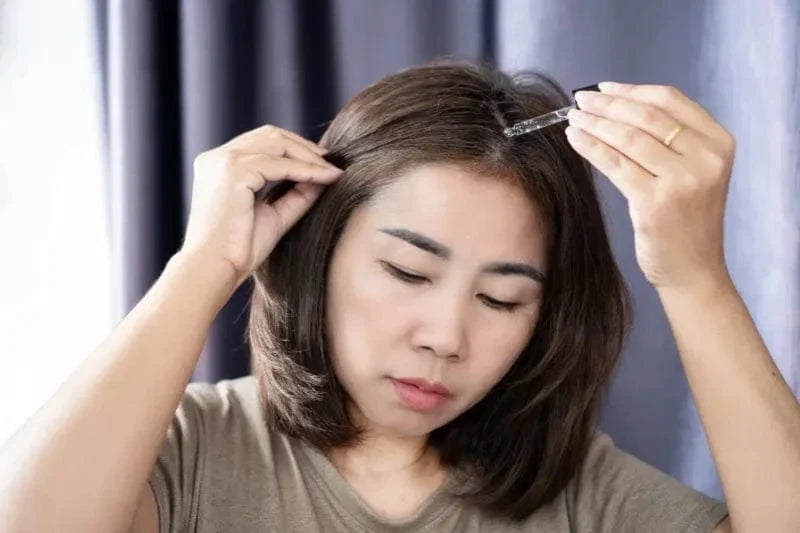
Between early mornings, long commutes, classes, meetings, workouts and deadlines, scalp care can easily become an afterthought. Yet maintaining a simple, consistent routine can help keep your scalp clean and comfortable while supporting healthier-looking hair.
The good news? Scalp wellness does not require an elaborate ritual. Appropriate cleansing, conditioning, gentle styling and choosing products suited to your scalp can make hair care easier - even during the busiest school and work days.
Why Scalp Wellness Matters
The scalp provides the environment from which hair grows, making scalp care an important part of an overall hair-care routine.
However, everyone's scalp is different. Oiliness, dryness, hair texture, styling habits, environmental exposure and how frequently you exercise can all influence what your scalp needs.
According to Chiu, C.-H. T., et al. (2015), hair health and condition can be affected by factors such as grooming practices, environmental exposure, nutrition, and the use of cosmetic products. The researchers also highlight that hair-care approaches may need to be adapted to different hair types and individual needs.
This is why the goal should not be to copy someone else's routine. Instead, pay attention to how your scalp and hair respond and build a routine that you can realistically maintain.
How Busy Days Can Affect Your Scalp
Sweat and physical activity
Walking to school, commuting, exercising or spending time in a warm environment can leave the scalp sweaty or oily.
You do not necessarily need to wash your hair immediately after every workout. However, if frequent sweating leaves your scalp uncomfortable, adjusting your cleansing frequency may help.
Product buildup
Styling creams, oils, gels and sprays can accumulate when cleansing is inconsistent.
Styling products are not automatically bad for your hair. The important thing is to use them thoughtfully and cleanse appropriately when your scalp needs it.
Tight hairstyles
Ponytails, buns and braids can be convenient during busy days. However, repeatedly wearing hairstyles that create excessive tension can place stress on the hair.
According to Guo, E. L., & Katta, R. (2017), discusses the relationship between hairstyles, traction and hair loss, particularly when tension is prolonged or repetitive.
Whenever possible, alternate hairstyles and avoid unnecessarily tight styles.
Build a Simple Scalp-Friendly Hair Routine
1. Choose a Shampoo That Fits Your Needs
A good scalp routine starts with appropriate cleansing.
Apply shampoo primarily to the scalp and massage gently using your fingertips rather than your nails. Rinse thoroughly to remove shampoo, sweat, oil and styling residue.
HYSSES offers a dedicated Hair Care Collection featuring shampoos, conditioners, scalp-care products and hair treatments. Options include Shampoo Bergamot Geranium, Shampoo Lavender Hinoki, Shampoo Ginger Peppermint and Shampoo Eucalyptus Rosemary.
HYSSES also offers the HYBiome Root Revival Shampoo, Rosemary Angelica, which forms part of its microbiome-focused hair-care approach.
For a deeper look at cleansing, read HYSSES' educational article, How Does Shampoo Work? The Science Behind a Clean Scalp. It explains how surfactants help lift oil and impurities from the scalp so they can be rinsed away.
2. Follow With Conditioner
Shampoo and conditioner serve different purposes.
While shampoo primarily cleanses, conditioner helps improve the feel, smoothness and manageability of the hair lengths.
HYSSES' Conditioner Collection includes options such as Conditioner Lavender Chamomile and Conditioner Eucalyptus Rosemary, allowing you to pair cleansing with appropriate conditioning care.
Apply conditioner mainly through the mid-lengths and ends unless the product instructions recommend otherwise.
For more guidance, explore HYSSES' related educational content on how to choose the right shampoo for your hair type.
3. Make Scalp Massage a Gentle Ritual
A few minutes of gentle scalp massage can make an ordinary shampoo routine feel more relaxing.
Use your fingertips and light, comfortable pressure. Avoid scratching or vigorous rubbing, especially if your scalp is sensitive or irritated.
The purpose is to make cleansing more mindful - not to aggressively stimulate the scalp.
Essential Oils and Scalp Wellness
Essential oils can add a pleasant sensory dimension to a hair-care ritual. HYSSES offers oils including Lavender, Peppermint, Bergamot, Geranium, Rosemary, Eucalyptus, Lemongrass, Tea Tree, Frankincense and Sandalwood through its Essential Oils Collection.
Lavender, for example, has a soft floral-herbal aroma that works naturally within a relaxing evening ritual. Learn more in HYSSES' Lavender Essential Oil guide.
Scientific research has also explored the potential role of essential oils in hair care. According to a review by Abelan, U. S., et al. (2021), studies have investigated the use of essential oils in cosmetic and dermatological hair products. However, the researchers noted that while essential oils may possess potentially beneficial biological properties, their effects on the scalp and hair require further research and are not yet fully understood.
This distinction matters. Essential oils can be part of a sensory wellness routine, but they should not automatically be described as treatments for hair loss or scalp disorders.
What About Peppermint and Hair Growth?
Peppermint oil is frequently discussed in hair-care content because of preliminary research.
A study according to Oh, J. Y., et al. (2014), found that peppermint oil increased several hair-growth measures in mice.
This is a useful example of why evidence should be interpreted carefully. Preliminary laboratory or animal findings can inform future research, but they are not equivalent to established clinical evidence in humans.
Five-Minute Scalp Wellness Habits
When your schedule is packed, keep your routine practical:
-
Check how your scalp feels each day.
-
Cleanse according to your individual needs.
-
Keep hairstyles comfortable rather than excessively tight.
-
Clean brushes, combs and frequently used accessories.
-
Avoid repeatedly scratching your scalp.
-
Minimise unnecessary heat exposure.
-
Introduce new products gradually.
-
Keep your routine simple enough to maintain consistently.
For additional inspiration, HYSSES' DIY Hair Routine with HYSSES Shampoo and Essential Oils explores ways to combine cleansing, conditioning and aromatherapy-inspired self-care.
Scalp Care for Students and Professionals
For students, scalp care can fit naturally around classes, sports and extracurricular activities. After a particularly active day, consider whether your scalp needs cleansing instead of repeatedly adding styling products.
For professionals, commuting and long working hours can leave hair feeling different by the end of the day. A simple wash or hairstyle adjustment may be more useful than continually adding more product.
If you exercise frequently, let your activity level guide your cleansing routine. Frequent sweating may mean your scalp benefits from more regular washing.
For travel, keep things simple: pack your cleanser, conditioner, essential styling products and clean hair accessories rather than carrying an unnecessarily complicated routine.
When Should You Seek Professional Advice?
Not every scalp concern can be addressed by changing shampoo.
Persistent itching, redness, pain, severe flaking, unusual sensitivity or significant hair shedding should be discussed with a dermatologist or another qualified healthcare professional.
Hair shedding can have many potential causes, so it is important not to assume that an essential oil, shampoo or cosmetic product can address an underlying medical condition.
Scalp wellness does not need to become another demanding task on your schedule.Start with the fundamentals: cleanse according to your scalp's needs, condition your hair lengths, handle your hair gently and avoid excessive tension. You can then introduce sensory elements such as HYSSES essential oils to make everyday self-care more enjoyable.
Explore the HYSSES Hair Care Collection, browse the Essential Oils Collection, or discover HYSSES' Scalp Care products to create a routine that fits your lifestyle.
The goal is not to have the longest or most complicated routine. It is to develop simple habits that you can maintain - even on your busiest school or work days.
Frequently Asked Questions
How often should I wash my scalp?
There is no universal schedule. Consider your scalp's oiliness, activity level, styling habits, environment and personal comfort.
Should shampoo be applied mainly to the scalp?
Yes. Shampoo is primarily intended to cleanse the scalp. Gently massage it into the scalp with your fingertips and rinse thoroughly.
Can essential oils be applied directly to the scalp?
Pure essential oils are highly concentrated and should not be applied undiluted. Follow the specific product's safety and dilution instructions.
Can peppermint oil make hair grow?
Research has shown promising results in animal models, but this does not establish that peppermint oil promotes hair growth in humans. The 2014 peppermint study was conducted in mice.
Is scalp massage beneficial?
Gentle scalp massage can be a relaxing addition to a hair-care routine. Avoid scratching or applying excessive pressure.
When should I see a dermatologist?
Seek professional advice if you experience persistent itching, redness, pain, severe flaking, unusual sensitivity or significant hair shedding.
Disclaimer
This guide is intended for educational and informational purposes only and does not replace professional medical, dermatological or healthcare advice. Individual scalp and hair needs vary, and results may differ. Essential oils are highly concentrated and should be used according to appropriate safety and dilution guidance. If you experience persistent scalp symptoms or significant hair shedding, consult a qualified healthcare professional.

Share:
From Morning Rush to All-Day Freshness: A Simple HYBiome Hair Care Routine for Busy Days
Daily Self-Care Made Simple: Pairing HYBiome Cooling Herbal Shampoo with HYBiome Guasha Body Cream