
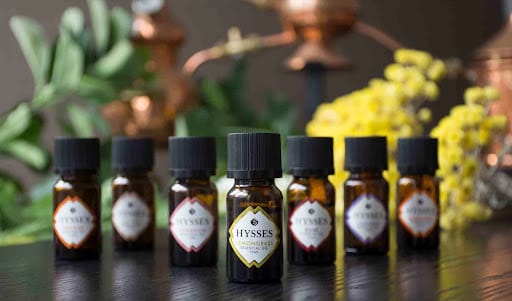
For many Australians, essential oils have become part of everyday self-care. A few drops of Lavender before bed, a diffuser running during a quiet evening, or a refreshing citrus aroma in the home can turn an ordinary routine into something more intentional.
But as the popularity of aromatherapy has grown, so has the range of prices attached to essential oils. One bottle can cost relatively little, while another with a similar botanical name can command a significantly higher price.
Does a higher price automatically mean better quality? Not necessarily. The price of an essential oil can reflect many factors beyond the oil itself, including sourcing, extraction, testing, packaging, distribution, retail structure and brand positioning. Geography can also influence how ingredients move from cultivation and processing to the finished product.
For Australian consumers, this makes the Asia-Pacific region particularly interesting. Australia is closely connected to Southeast Asia through established trade, investment and supply networks, while countries across the region are home to rich botanical resources and long-standing traditions of working with aromatic plants. Australia and Southeast Asia also have extensive formal trade relationships, supported by agreements including AANZFTA and RCEP.
HYSSES, a Singapore-based aromatherapy and wellness brand, sits within this broader Asian botanical landscape. Its approach combines essential-oil expertise with a strong emphasis on sourcing, formulation and transparency.
So rather than asking whether an essential oil is expensive enough to be considered premium, it may be more useful to ask a different question: What actually makes an essential oil worth its price?
Why Essential Oil Prices Can Vary So Much
There is no single factor that determines the price of an essential oil. Two bottles containing different brands of the same botanical may have very different prices because the companies behind them may use different sourcing arrangements, extraction methods, testing procedures, packaging, distribution channels and retail models.
1. Botanical sourcing matters
Essential oils begin with plants, and plants do not grow equally everywhere.
Climate, soil, rainfall, agricultural practices and local expertise can all influence where particular botanicals are cultivated and processed. HYSSES has long highlighted the importance of sourcing ingredients from environments where they naturally thrive, rather than assuming that every botanical should be grown in the same location.
This is one reason the Asia-Pacific region is an interesting source of aromatic ingredients.
The region is home to botanicals commonly used in aromatherapy and perfumery, including Lemongrass, Vetiver, Ylang Ylang, Patchouli and other tropical plants.
For a brand working within this region, proximity to particular botanical sources can form part of its sourcing strategy.
That does not, however, mean that every Asia-Pacific oil is automatically superior or cheaper. Quality still depends on the individual supplier, plant material, extraction process, storage and testing.
2. Extraction and testing influence value
The plant is only the beginning. Once harvested, aromatic material needs to be processed appropriately to obtain the essential oil. Depending on the botanical, methods may include steam distillation or cold pressing.
HYSSES' current essential-oil guidance states that its oils are carefully steam-distilled or cold-pressed and tested through GC/MS (Gas Chromatography-Mass Spectrometry) for purity and authenticity.
GC-MS testing is particularly useful because it provides a chemical profile that can help identify the constituents present in an essential oil.
HYSSES explains its approach in more detail in its article on GC-MS-tested essential oils and purity, where it discusses how testing can help verify authenticity and identify potential adulteration.
For consumers, this is an important lesson:
Price tells you what you are paying. Testing and transparency help you understand what you are buying.
3. Packaging and distribution add to the final price
The cost of an essential oil is not simply the cost of the plant.
A finished product may also involve:
-
Cultivation and harvesting
-
Extraction
-
Quality testing
-
Bottling
-
Packaging
-
Warehousing
-
Transportation
-
Import and distribution costs
-
Retail and marketing expenses
This means a higher retail price does not necessarily mean the oil itself contains a more valuable botanical composition.
At the same time, a lower price should not automatically be interpreted as evidence of poor quality.
The more useful approach is to look beyond the sticker price.
The Asia-Pacific Perspective
Australia's relationship with Southeast Asia makes this conversation particularly relevant.
Southeast Asian countries are major economic partners for Australia, with extensive trade relationships supported by regional and bilateral agreements. The Australian Government identifies Southeast Asia as a key part of Australia's economic future, while ASEAN collectively represents one of Australia's most important trading relationships.
Australia's trade data also reflects the strength of these regional connections. In 2025, Singapore and Thailand were among Australia's five largest import partners by value.
This regional proximity creates opportunities for Australian consumers to discover products originating from neighbouring Asian markets rather than assuming that premium wellness products must come from Europe or North America.
A Rich Botanical Landscape
The Asia-Pacific region offers an aromatic palette that extends well beyond the familiar Lavender and Eucalyptus combination.
Depending on the country and botanical source, consumers may encounter:
-
Lemongrass
-
Vetiver
-
Ylang Ylang
-
Patchouli
-
Frangipani
-
Sandalwood
-
Frankincense
-
Citrus botanicals
HYSSES' own Essential Oils Collection reflects this broader approach, bringing together floral, citrus, woody, herbaceous and camphorous aromatic profiles.
Explore the HYSSES Essential Oils Collection
This regional diversity can be valuable for consumers who want to explore aromas beyond the more familiar Western wellness palette.
Does Lower Cost Mean Lower Quality?
This is where the original assumption about "premium" deserves a closer look. Lower cost and lower quality are not automatically the same thing.
A product can be competitively priced for several reasons. A brand may have efficient sourcing relationships, regional manufacturing, direct distribution or a different retail structure.
Likewise, an expensive product can be beautifully made—but its price may also reflect packaging, marketing, distribution and positioning.
The important question is therefore not:
"How expensive is this oil?"
It is:
"What evidence is there that this oil has been responsibly sourced, properly processed and appropriately tested?"
HYSSES' current educational content encourages consumers to look for indicators such as botanical names, country of origin and testing transparency when choosing essential oils.
You can also read HYSSES' guide to choosing essential oils for a broader look at purity, sourcing, application and safety.
What Should Australian Consumers Look for When Buying Essential Oils?
Rather than using price as a shortcut for quality, consider these five factors.
1. Botanical Identity
A reputable essential oil should clearly identify the plant it comes from.
Look for the botanical or Latin name where available, rather than relying solely on broad names such as "floral blend" or "fresh botanical oil."
This makes it easier to understand exactly what you are purchasing.
2. Country of Origin and Sourcing Information
Where was the botanical grown?
Where was it processed?
Does the brand provide meaningful information about sourcing?
These questions can tell you more about a product than a premium-looking bottle alone.
HYSSES has historically emphasised the importance of sourcing ingredients from native or suitable growing environments and maintaining relationships with farms and farmers.
3. Extraction Method
Different botanicals require different extraction approaches.
Steam distillation is widely used for aromatic plants, while cold pressing is commonly associated with citrus oils.
Understanding the extraction method gives you a better picture of how the oil was produced.
4. Testing and Transparency
Testing is one of the strongest quality indicators consumers can investigate.
HYSSES states that its essential oils undergo GC-MS testing and provides educational material explaining what this testing means.
You can learn more in The Truth About GC-MS Tested Essential Oils and Pure Quality.
5. Responsible Usage Information
A good essential-oil brand should not only tell you what an oil can be used for; it should also explain how to use it responsibly.
This matters particularly in Australia, where the regulatory status of a product containing essential oils can depend on the claims made about it.
The Australian Therapeutic Goods Administration explains that essential oils can be used in cosmetics, general products or therapeutic goods, and that products making therapeutic claims may be subject to therapeutic-goods regulation.
For Australian consumers, this makes responsible product communication especially important.
HYSSES and the Asian Aromatherapy Tradition
HYSSES' connection to Asia is not simply a geographical marketing story. The brand's history is closely connected with aromatherapy, botanical ingredients and the idea of bringing nature into everyday rituals.
HYSSES explains that its name comes from the Chinese characters 乡术, associated with "arts from the village", reflecting its connection to nature and traditional knowledge. The brand has also described its commitment to fair and sustainable business practices and relationships with farms and farmers.
Its broader philosophy is reflected throughout HYSSES Discovery, where essential oils are presented not simply as fragrances but as part of daily rituals involving the senses, home, body and mind.
Read HYSSES' Ultimate Guide to Essential Oils
This regional identity also gives consumers access to aromatic profiles that feel distinctly Asian and tropical.
Beyond Price: Exploring the HYSSES Essential Oil Range
One advantage of moving beyond a purely price-driven approach is that it allows you to explore oils according to your actual preferences and rituals.
For a Floral Ritual
Lavender and Ylang Ylang offer soft, floral profiles that can work well in evening or self-care rituals.
Explore HYSSES Floral Essential Oils
For Fresh, Green Aromas
Lemongrass offers a bright, distinctly tropical character and is a natural choice for consumers who want something fresher and more vibrant.
For Woody, Grounding Notes
Sandalwood, Cedarwood and Frankincense offer deeper aromatic profiles that can suit meditation, reflection or quiet evening rituals.
HYSSES also has a dedicated range of Remedies Essential Oil Blends, allowing consumers to explore pre-formulated combinations rather than purchasing numerous individual oils.
For more ideas on incorporating oils into daily life, HYSSES' Essential Oils blog includes guides covering diffusers, skincare, stress, aromatherapy and essential-oil safety.
Can Regional Sourcing Also Be More Sustainable?
It is tempting to assume that a shorter geographical distance automatically means a smaller environmental footprint.
The reality is more complicated.
The environmental impact of an essential oil depends on many factors, including how the plant is cultivated, how much botanical material is required to produce the oil, processing, packaging and transportation.
So it would be too simplistic to say that every Asia-Pacific essential oil automatically has a lower carbon footprint for an Australian consumer.
What can reasonably be said is that regional trade gives consumers another supply-chain option and encourages closer attention to where ingredients come from and how they move through the supply chain.
For consumers interested in sustainability, transparency is therefore more useful than a blanket assumption about geography.
Ask:
-
Where was the plant grown?
-
How was it harvested?
-
How was it extracted?
-
Where was it bottled?
-
How was it transported?
-
Does the brand explain its sourcing practices?
The more information a brand provides, the easier it becomes to make an informed decision.
How Australians Can Shop for Better Value
If you are trying to make essential oils more affordable without compromising your expectations for quality, start with the basics.
Compare Cost Per Use
Do not look only at the price of the bottle. Consider how you intend to use it, how concentrated the product is, and how many applications you expect to get from it.
Start With Versatile Oils
If you are new to aromatherapy, you do not need a large collection immediately. A few versatile oils can give you the opportunity to explore different scent families before expanding your collection.
Read the Label
Look for:
-
Botanical name
-
Ingredients
-
Country or sourcing information where provided
-
Recommended method of use
-
Safety instructions
-
Batch or testing information where available
Explore Regional Aromas
If your essential-oil collection currently consists of familiar Western staples, consider exploring tropical and Asian botanicals.
Lemongrass, Vetiver, Ylang Ylang and Patchouli can introduce an entirely different aromatic dimension.
Choose Transparency Over Marketing Language
Terms such as "premium", "luxury" or "therapeutic grade" should not be the only reasons you trust an essential oil.
Look for evidence behind the claims.
HYSSES itself has addressed the importance of moving beyond vague purity language and towards testing and transparency.
A More Thoughtful Definition of "Premium"
Perhaps the biggest lesson for Australian essential-oil consumers is that premium does not have to mean expensive.
True value can come from a combination of factors:
-
Appropriate botanical sourcing
-
Careful extraction
-
Quality testing
-
Responsible formulation
-
Transparent labelling
-
Thoughtful packaging
-
A reliable supply chain
-
A price that reflects the product rather than simply its marketing position
This does not mean that every affordable oil is high quality. It means that price alone cannot tell you whether an essential oil is good. A thoughtful consumer looks beyond the bottle and asks what happened before the oil reached the shelf.
Final Thoughts: Look Beyond the Price Tag
The rising popularity of essential oils has created a market filled with choice and sometimes considerable price differences.
For Australian consumers, looking towards the Asia-Pacific region opens up an opportunity to explore a broader botanical landscape while also thinking more critically about sourcing, trade and value.
The strongest case for regional essential oils is not simply that they are cheaper. It is that they can offer something different: botanical diversity, regional expertise, distinctive aromatic traditions and another way of thinking about how a product moves from plant to bottle.
HYSSES' approach reflects this connection between nature, aromatherapy and Asian botanical heritage, while its current educational content places increasing emphasis on transparency, testing and responsible use.
So the next time you compare two essential oils, look beyond the price. Ask where the botanical came from. Ask how it was extracted. Ask whether the brand provides meaningful information about quality.
And most importantly, ask whether the product offers enough transparency for you to make an informed choice.
Because affordable does not automatically mean lesser, and expensive does not automatically mean better.
Sometimes, the smarter choice is simply the one that gives you enough information to understand exactly what you are paying for.
Frequently Asked Questions
1. Are essential oils from Asia-Pacific countries good quality?
They can be, but geographical origin alone does not determine quality. Look at factors such as botanical identity, sourcing, extraction method, testing, storage and transparency. HYSSES states that its essential oils are tested using GC-MS and are produced through methods including steam distillation and cold pressing.
2. Why can some essential oils be cheaper than others?
Essential-oil pricing can reflect sourcing, extraction, testing, packaging, distribution, retail structure and brand positioning. A lower price does not automatically mean lower quality, just as a higher price does not automatically prove superior quality.
3. What should I look for when buying essential oils in Australia?
Look for clear botanical identification, ingredient information, sourcing details, appropriate usage instructions and evidence of quality testing where available. Australian consumers should also pay attention to product claims because essential oils marketed with therapeutic claims may fall under Australia's therapeutic-goods regulatory framework.
4. Does HYSSES use Asian botanicals?
HYSSES has a long-standing focus on botanicals and aromatherapy within an Asian context and states that it sources ingredients from suitable native environments. Its range includes aromatic profiles such as Lemongrass, Ylang Ylang, Vetiver and other botanical oils.
5. What is GC-MS testing and why does it matter?
GC-MS stands for Gas Chromatography-Mass Spectrometry. It is an analytical technique used to examine the chemical composition of an essential oil. HYSSES states that its essential oils undergo GC-MS testing to help verify purity and authenticity.
Disclaimer
This article is intended for general educational and lifestyle purposes only. Essential oils are highly concentrated botanical products and should be used according to product-specific instructions. Aromatherapy should not be used as a substitute for professional medical diagnosis or treatment.
Australian consumers should also be aware that the regulatory classification of products containing essential oils can depend on how the product is presented and the claims made about it. Products making therapeutic claims may be subject to requirements administered by the Therapeutic Goods Administration.
If you are pregnant, breastfeeding, managing a medical condition, taking medication or using essential oils around children or pets, seek appropriate professional advice before use.
References
HYSSES. The Ultimate Guide to Essential Oils.
Read the HYSSES Essential Oils Guide
HYSSES. The Truth About GC-MS-Tested Essential Oils and Pure Quality.
Read HYSSES' GC-MS Guide
HYSSES. Aromatherapy in Singapore.
Read HYSSES' Aromatherapy Guide
HYSSES. Essential Oils Collection.
Explore HYSSES Essential Oils
Australian Government Department of Foreign Affairs and Trade. Implementing Invested: Australia's Southeast Asia Economic Strategy to 2040.
Read the Australian Government's Southeast Asia Economic Strategy
Australian Government Department of Foreign Affairs and Trade. ASEAN and Australia.
Read about Australia–ASEAN trade and investment
Australian Bureau of Statistics. International Trade: Supplementary Information, Calendar Year 2025.
View Australian international trade data
Therapeutic Goods Administration. Determining if your product is a cosmetic or therapeutic good.
Read TGA guidance on essential oils and product claims

Share:
Budget-Friendly Christmas Gifts Under $25
Budget-Friendly Christmas Gifts Under $25