

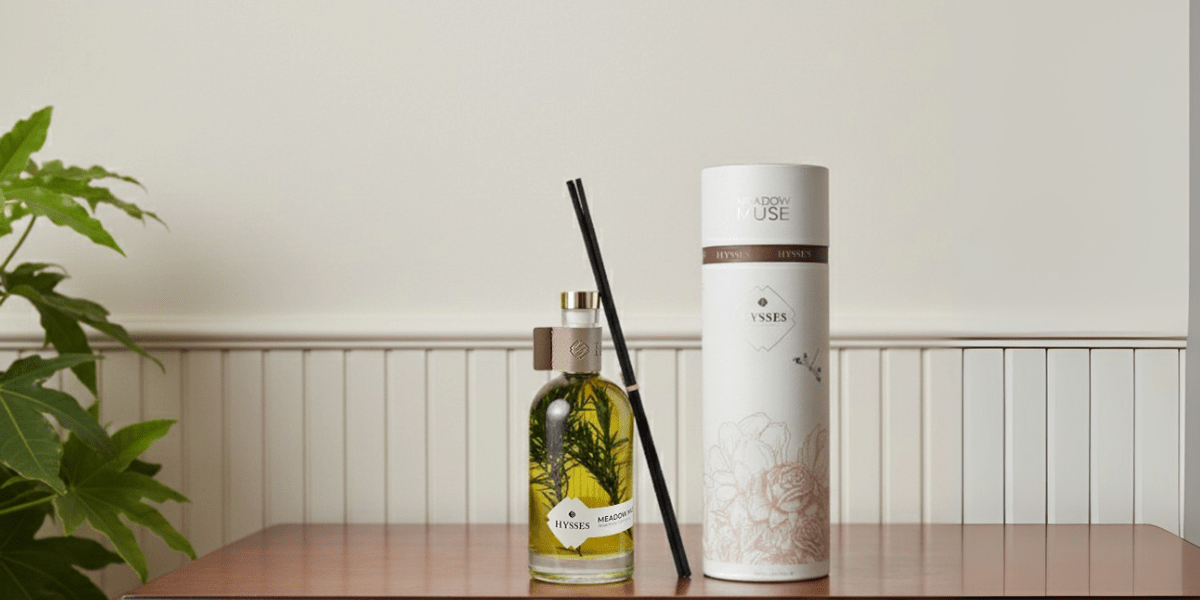
Walk into any home-scenting aisle and you'll find half a dozen device types all called "diffusers" ultrasonic, nebulizing, reed, clay, heat-based, each working on a completely different mechanism, with different strengths, trade-offs, and ideal use cases. Choosing between them isn't just an aesthetic decision; it changes how strong the scent is, how long it lasts, and even what you're actually breathing in.
This guide breaks down how each diffuser type physically works, what the research says about aromatherapy's real effects, and a practical framework for choosing the right one for your space along with an honest look at the air-quality considerations that most guides skip entirely.
"A well-crafted diffuser is not just a vessel for scent, it's a bridge between nature and the spaces where we live and work." Cheryl Gan, Founder and Managing Director of HYSSES.
What a Diffuser Actually Does
At its core, a diffuser is a device that disperses essential oil molecules into the air so they can be inhaled and, in some cases, have measurable physiological effects, not just a pleasant smell. This matters because the method of dispersal directly determines how much oil reaches the air, in what form, and how consistently.
Not every "diffuser" on the market actually diffuses oil into the air as a fine mist; some rely on passive evaporation, and understanding the difference will save you from buying the wrong device for your goal.
The Five Main Types of Diffusers, Explained
1. Ultrasonic Diffusers
These use a small electronic disc vibrating at ultrasonic frequency beneath a mix of water and essential oil. The vibration breaks the liquid into an extremely fine mist, which is released into the air along with ambient humidity. This is the most common diffuser type sold today because it's quiet, doubles as a light humidifier, and lasts several hours per fill.
Best for: bedrooms, living rooms, and anyone who also wants a humidity boost in air-conditioned spaces.
2. Nebulizing Diffusers
Unlike ultrasonic models, nebulizing diffusers don't use water at all. They use pressurized air to atomize pure, undiluted essential oil directly into a fine aerosol. Because there's no water dilution, the scent output is significantly more concentrated per session which also means nebulizers typically run in shorter timed bursts rather than continuously.
Best for: larger or open-plan rooms, and anyone specifically pursuing aromatherapy's inhalation effects rather than ambient humidity.
3. Heat Diffusers
This gently warm essential oil, usually via a candle or electric heating element, to encourage evaporation. Heat can alter the chemical structure of some essential oil compounds, which is why heat diffusion is generally considered less true to the oil's original aromatic profile than ultrasonic or nebulizing methods though it remains popular for its ambient, cozy quality.
Best for: ambiance-focused spaces where subtle, warm scent throw matters more than aromatherapy precision.
4. Reed Diffusers
A completely passive, non-electric method: reed sticks are inserted into a bottle of scented oil and slowly wick the fragrance up through capillary action, releasing scent continuously as it evaporates from the exposed reed surface. There's no mist, no sound, and no electricity involved.
Best for: bathrooms, entryways, and spaces where a continuous, low-level scent is preferred over an active mist.
5. Clay and Flame-Free Figurine Diffusers
A newer category handcrafted clay vessels, like HYSSES' Clay Diffuser Set, work similarly to reed diffusers through passive evaporation, but the porous, unglazed clay itself absorbs and slowly releases the diffusing oil, typically lasting three to four weeks per refill without requiring heat, flame, or electricity at all.
Best for: smaller spaces, desks, or anyone wanting a decorative, low-maintenance option with zero running cost.
What the Research Actually Says About Diffused Essential Oils
Aromatherapy's core claim is that inhaled aromatic compounds can influence mood, stress response, and physiological markers like heart rate not just perception of smell. Several controlled clinical trials have tested this directly, most commonly using lavender oil inhalation in medical and pre-procedure settings, where anxiety is easy to measure objectively.
A randomized clinical trial by Arslan, I., Aydınoglu, S., & Karan, N. B. (2020), published in the European Journal of Pediatrics, tested lavender oil inhalation in 126 children undergoing tooth extraction. Children who inhaled lavender oil for three minutes before the procedure showed significantly lower anxiety and pain scores afterward, along with measurable changes in physiological stress markers, compared with children who received no inhalation.
A separate randomized trial by Karan, N. B. (2019), published in Physiology & Behavior, examined lavender oil inhalation in adults undergoing oral surgery, measuring both anxiety scores and vital signs (blood pressure, heart rate, respiratory rate, and oxygen saturation) as primary outcomes. The study found meaningful associations between lavender inhalation and improvements in both self-reported anxiety and measured physiological indicators.
Together, these trials conducted in clinical, tightly controlled environments offer some of the strongest available evidence that inhaled essential oils can produce measurable physiological effects, not just subjective relaxation. It's worth noting that most of this research focuses on short-term, acute stress situations (medical procedures) rather than long-term daily diffuser use at home, so the findings should be read as evidence of a real mechanism, rather than a guarantee of a specific outcome from ambient home diffusion.
An Honest Look at Diffusers and Indoor Air Quality
Most diffuser guides stop at benefits; a genuinely trustworthy one should also cover what the research says about air quality, because it's directly relevant to how you use a diffuser safely.
A chamber study from the University of Toronto's Air Quality research group measured VOC (volatile organic compound) and particulate matter emissions from ultrasonic diffusers using lemon, lavender, eucalyptus, and grapeseed oils. The study found that essential oil diffusers do release measurable VOCs and fine particulate matter into indoor air, with the amount and particle size varying significantly by oil type and notably, using tap water instead of distilled water in an ultrasonic diffuser was found to increase particulate emissions roughly fivefold.
A related study by Rimdjonoka, R., Veignere, E., Laicāns, I., Martinsone, Ž., & Skadiņš, I. (2024), published through Rīga Stradiņš University, similarly examined how water type affects particulate matter output from ultrasonic diffusers, reinforcing that water quality is a meaningful, controllable variable in diffuser emissions.
What this means practically, not alarmingly: these findings don't suggest diffusers are dangerous in ordinary home use they simply confirm that a diffuser is actively adding compounds to your indoor air, the same way any scented product does, and a few simple habits make that meaningfully cleaner:
-
Use distilled or filtered water in ultrasonic diffusers rather than tap water, to reduce particulate output.
-
Ventilate the room periodically rather than running a diffuser continuously in a fully sealed space.
-
Avoid continuous, all-day operation intermittent cycles (commonly built into most diffusers as timer settings) allow the room's air to refresh between sessions.
-
Choose pure, quality-tested essential oils. Lower-quality or synthetic fragrance oils are more likely to contain the kind of harsher VOCs (like added solvents) that raise genuine concern, compared with pure, correctly distilled essential oils.
This is also where non-mist diffusion methods reed and clay diffusers in particular have a genuine practical advantage: because they don't aerosolize liquid into fine airborne particles, they avoid the particulate matter question altogether, which is one reason flame-free clay diffusers like HYSSES' Clay Diffuser Set have become a popular lower-maintenance, lower-emission alternative for smaller or enclosed spaces such as bedrooms and offices.
How to Choose the Right Diffuser for Your Space
Rather than picking based on appearance alone, match the diffuser type to your room size, goal, and routine:
For bedrooms and sleep support
A quiet ultrasonic diffuser with a timer function and auto shut-off is generally the best fit it runs long enough to support a wind-down routine without needing to stay on overnight. Pair it with calming oils such as lavender or sandalwood.
For living and open-plan spaces
Nebulizing diffusers or larger-capacity ultrasonic models handle bigger air volumes better than small desktop units. If continuous ambient scent matters more than concentrated aromatherapy sessions, a reed diffuser can also work well in open spaces.
For desks and small personal spaces
Compact ultrasonic diffusers or clay figurine diffusers are ideal; they scent a small area effectively without overwhelming a shared office or enclosed room.
For bathrooms and entryways
Reed diffusers or clay diffusers make the most sense here, since these spaces benefit from continuous, low-level scent rather than an active mist, and don't usually have anyone spending extended time breathing concentrated air.
For gifting or minimal-maintenance scenting
Flame-free, no-electricity options like handcrafted clay diffusers are increasingly popular gifts precisely because they need no setup, no water refills, and no power outlet, while still delivering weeks of consistent scent per refill.
Explore HYSSES' full Diffusers collection and Nebulisers collection to compare options across these categories, or browse Home Scent diffusing oil refills to keep an existing diffuser running.
How to Use a Diffuser Correctly
Getting a diffuser right isn't just about turning it on a few habits significantly affect both performance and safety:
-
Follow the oil-to-water ratio on your specific device typically 5–8 drops of essential oil per 100ml of water for ultrasonic diffusers, though this varies by model.
-
Use pure essential oils, not fragrance oils, if aromatherapy benefit (not just scent) is the goal the research above specifically involved pure essential oil inhalation.
-
Clean your diffuser regularly. Oil residue can build up in the reservoir and affect both mist output and hygiene over time.
-
Positioned thoughtfully elevated slightly off the floor and away from direct airflow (fans, air-con vents) allows the scent to disperse more evenly through the room.
-
Use timer settings rather than continuous operation, both for the air-quality reasons discussed above and because most people's noses "acclimate" to a scent within 20–30 minutes anyway, reducing the perceived benefit of nonstop diffusion.
Frequently Asked Questions
1. Are essential oil diffusers safe to use every day?
Used correctly clean water, quality oils, and periods of ventilation moderate daily use is generally considered safe for most healthy adults. Anyone with respiratory conditions, asthma, or living with young children or pets should use diffusers in well-ventilated areas and consider shorter, timed sessions rather than continuous all-day diffusion.
2. What's the real difference between ultrasonic and nebulizing diffusers?
Ultrasonic diffusers mix essential oil with water to create a fine, humidity-adding mist, while nebulizing diffusers atomize pure, undiluted oil using pressurized air, producing a more concentrated aromatic output without added moisture.
3. Do diffusers actually improve air quality?
Not in the sense of filtering or purifying air diffusers add aromatic compounds to a room rather than removing pollutants. Some essential oils have documented antimicrobial properties in laboratory settings, but a diffuser should be thought of as an aromatherapy and scenting tool, not an air purifier.
4. How long should I run my diffuser each session?
Most ultrasonic diffusers run 2–8 hours per fill depending on the mist setting, but shorter, intermittent sessions (30–60 minutes with breaks) are generally preferable to continuous all-day operation, both for scent perception and indoor air considerations.
5. Which HYSSES diffuser is best for beginners?
For a low-maintenance starting point, the flame-free Clay Diffuser requires no water, electricity, or daily attention. For those wanting a more traditional ultrasonic experience with sleep-support features like timers and auto shut-off, explore the full Diffusers collection alongside HYSSES' range of pure essential oils.
Disclaimer
This article is intended for educational and informational purposes only and should not be considered medical advice. Aromatherapy and essential oil use may not be suitable for everyone, including pregnant individuals, young children, pets, and people with respiratory conditions or allergies. Always use diffusers in well-ventilated spaces, follow manufacturer guidance, and consult a healthcare professional with specific health concerns before beginning any aromatherapy routine.
References
-
Air Quality Research Group, University of Toronto. Emissions of VOCs and particulate matter from ultrasonic essential oil diffusers: A chamber study.
-
Tisserand, R., & Young, R. (2014). Essential Oil Safety: A Guide for Health Care Professionals. Churchill Livingstone.

Share:
Does Rosemary Oil Really Help Hair Growth? What the Evidence Says
What Is a Clay Diffuser? How It Works Without Water or Heat