

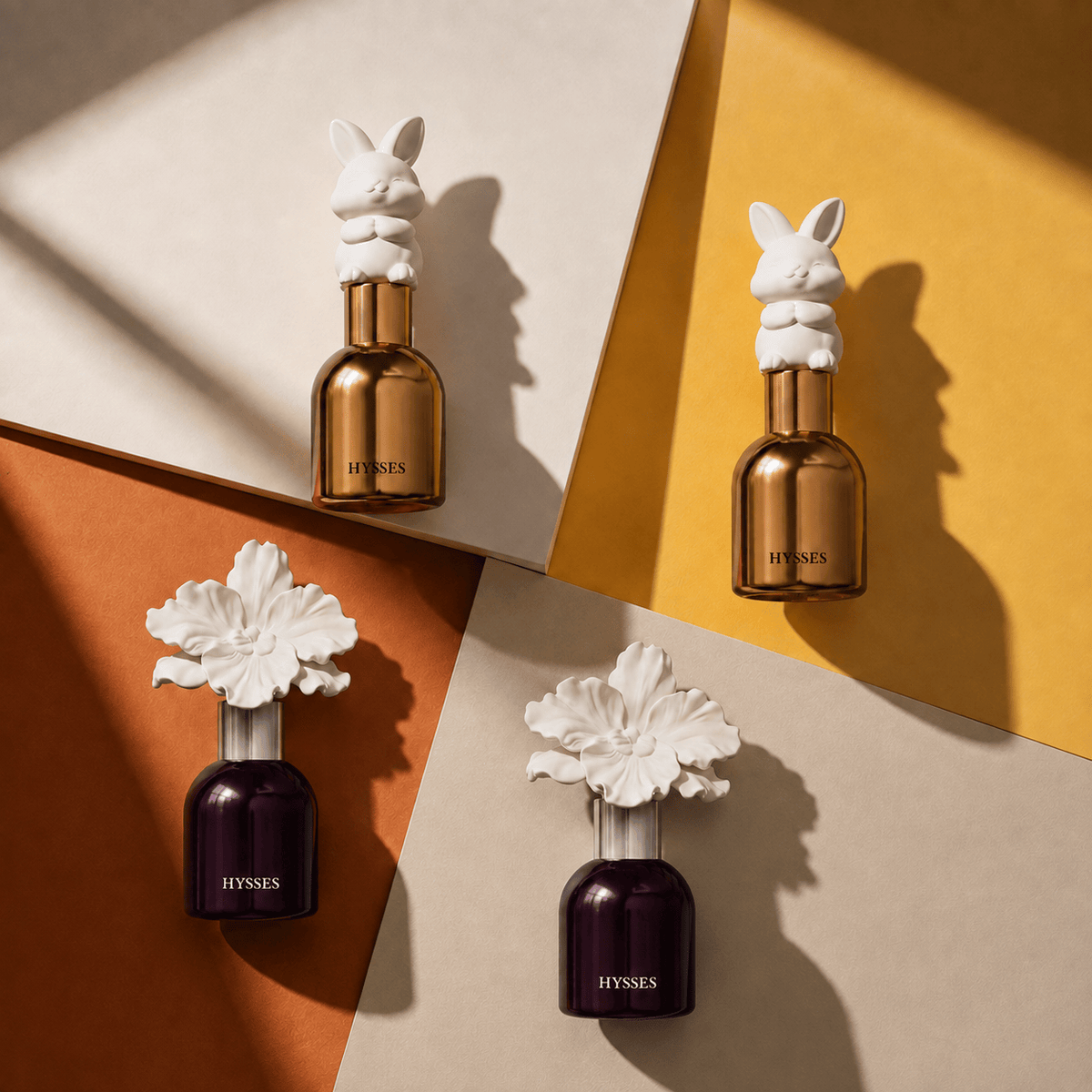
If you enjoy having a beautifully scented space but prefer a simple, quiet, and low-maintenance approach, a clay diffuser may be worth discovering.
Unlike ultrasonic diffusers that use water or electric diffusers that require a power source, a clay diffuser works through passive diffusion. It uses the natural porosity of clay to absorb aromatic oils and gradually release their fragrance into the surrounding air.
There is no mist, no heating element, no flame, and, depending on the design, no electricity.
But how can fragrance fill a space without any of these things?
The answer lies in the properties of porous clay and the natural evaporation of aromatic compounds.
What Is a Clay Diffuser?
A clay diffuser is a type of passive fragrance diffuser made from porous clay or ceramic material. Instead of using electricity, heat, water, or a mechanical fan, it allows fragrance to be released naturally over time.
Clay has a naturally porous structure. When fragrance or diffusing oil comes into contact with the material, the liquid is gradually absorbed into the tiny spaces within the clay. As the aromatic compounds reach the surface, they evaporate into the surrounding air.
This process is known as passive diffusion.
HYSSES has long used scenting clay as a flame-free method of delicate fragrance diffusion. Its porous clay pieces are designed to absorb oils and release a subtle scent, making them particularly suitable for smaller, enclosed areas. Learn more about how scenting clay works.
Unlike an ultrasonic diffuser, a clay diffuser does not produce a visible mist. Instead, fragrance is released quietly and gradually.
How Does a Clay Diffuser Work Without Water or Heat?
The science behind a clay diffuser is surprisingly simple.
1. The clay absorbs the oil
The first part of the process is absorption.
Porous clay contains tiny spaces that allow it to take in liquid. When a suitable diffusing oil comes into contact with the clay, the oil gradually moves into these pores.
With HYSSES clay diffusers, the ceramic piece is designed to absorb the supplied home scent diffusing oil. Because the surface has different contours and exposed areas, absorption can occur at different rates across the piece. This can also create natural variations in colour as the clay absorbs the oil.
2. The fragrance moves toward the surface
Once the oil has been absorbed, the aromatic compounds slowly make their way toward the exposed surface of the clay.
There is no motor pushing the fragrance out and no heat speeding up the process.
Instead, the process happens naturally at room temperature.
3. Aromatic compounds evaporate
As fragrance reaches the surface of the clay, volatile aromatic compounds evaporate into the surrounding air.
This is why a clay diffuser can scent an area without creating mist.
The result is generally a soft and subtle fragrance experience, rather than the stronger, immediate scent throw associated with some electric or nebulising diffusers.
Why Doesn't a Clay Diffuser Need Water?
Water is necessary for certain types of diffusers, particularly ultrasonic water-mist diffusers, because the device uses vibrations to break a mixture of water and oil into a fine mist.
A clay diffuser works differently.
There is no water reservoir and no ultrasonic vibration. The fragrance oil itself is absorbed into the porous clay and gradually released through evaporation.
This makes clay diffusion particularly convenient for people who do not want to refill and clean a water tank.
If you are comparing different diffuser technologies, understanding how each one releases fragrance can help you choose the right option for your space. Read our guide to using different types of diffusers.
Why Doesn't a Clay Diffuser Need Heat?
Heat can accelerate evaporation, which is why traditional oil burners use a flame or heating element to release fragrance.
A clay diffuser does not rely on this process.
Instead, it uses the natural evaporation of aromatic compounds from its porous surface. This means the clay can diffuse fragrance at room temperature without an open flame or electrical heating element.
For anyone looking for a quiet and flame-free scenting method, this can be an appealing alternative to traditional oil burners.
It is also important to distinguish a clay diffuser from a nebulising diffuser. A nebuliser uses cold-air technology to atomise essential oil into very small droplets, while a clay diffuser relies on absorption and passive evaporation. HYSSES explains the differences between water mist, nebulising, and other diffuser technologies in its diffuser guide.
What Makes Clay Suitable for Diffusion?
The key characteristic is porosity.
Porous clay can absorb liquid and hold it within its structure before allowing it to gradually return to the surface.
This makes it naturally suited to slow fragrance release.
Clay also has another advantage: it can function as both a fragrance accessory and a decorative object.
Rather than looking like an electronic appliance, a handcrafted clay diffuser can become part of the décor. HYSSES' Cutie Clay Diffuser collection, for example, combines porous clay with character-inspired designs, allowing the diffuser to function as both a scenting object and a decorative accent.
Explore the HYSSES Cutie Clay Diffuser collection.
How to Use a Clay Diffuser
One of the main attractions of clay diffusion is how little equipment is required.
The exact instructions depend on the design, but a HYSSES-style clay diffuser generally works through a simple absorption process.
Step 1: Prepare the diffuser
Place your clay diffuser on a stable, level surface.
Choose an area where the fragrance can circulate naturally and where the diffuser will not easily be knocked over.
Step 2: Add the appropriate diffusing oil
For designs that use a vase and cotton string, add the recommended home scent diffusing oil to the base.
The cotton string absorbs the oil and helps transfer it toward the clay piece, where the fragrance can gradually diffuse into the surrounding environment.
Always follow the instructions supplied with your specific diffuser rather than adding an unsuitable oil or liquid.
Step 3: Allow the clay to absorb the fragrance
New, dry clay can absorb oil more quickly.
HYSSES notes that its clay diffusers typically provide around 2–3 weeks of scent during the first use, while subsequent refills may last approximately one month, although actual longevity can vary depending on the diffuser, environment, oil, and usage.
Step 4: Let passive diffusion do the work
Once the diffuser is prepared, there is no need to switch anything on.
The clay gradually absorbs and releases fragrance while it sits in the space.
This makes it particularly convenient for desks, bedside tables, shelves, entryways, and other smaller areas where a gentle scent is preferred.
Where Should You Place a Clay Diffuser?
Because clay diffusers provide a subtle form of fragrance diffusion, placement can make a noticeable difference to the experience.
Consider placing one in:
-
A bedside area for a gentle scent during your evening routine
-
A home office or desk to add fragrance without adding another electronic device
-
An entryway to create a welcoming scent as you enter the home
-
A reading corner as part of a quiet relaxation ritual
-
A wardrobe or enclosed storage area where appropriate
-
A small living space where a softer fragrance is preferred
Avoid placing the diffuser somewhere unstable or where it could easily be knocked over.
HYSSES also recommends placing diffusers on stable, elevated surfaces and keeping them away from direct sunlight, heat sources, and strong drafts.
Clay Diffuser vs Other Types of Diffusers
Not all diffusers work in the same way.
Clay Diffusers
How they work: Absorption and passive evaporation
Water required: No
Heat required: No
Electricity required: No
Scent profile: Generally subtle and gradual
Best suited for: Small spaces, desks, bedrooms, decorative scenting and low-maintenance use
Ultrasonic Diffusers
How they work: Ultrasonic vibrations disperse water and essential oil as a fine mist
Water required: Yes
Electricity required: Yes
Additional feature: Can humidify the surrounding air
Nebulising Diffusers
How they work: Cold-air technology atomises essential oil into very small particles
Water required: No
Heat required: No
Electricity required: Usually yes, depending on the model
Scent profile: Typically stronger and more direct
Reed Diffusers
How they work: Reeds absorb fragrance oil and release it gradually into the air
Water required: No
Heat required: No
Electricity required: No
Scent profile: Continuous and passive
Each method serves a different purpose. For a deeper comparison, learn more about the different types of diffusers and how they work.
What Are the Benefits of Using a Clay Diffuser?
A clay diffuser can offer several practical advantages for everyday home scenting.
Waterless and heat-free
There is no water tank to fill and no heating element to operate.
Quiet operation
Because there is no motor or fan, a passive clay diffuser operates silently.
No power outlet required
A clay diffuser does not need to be plugged in, making it easy to place on a desk, shelf, bedside table, or other suitable location.
Low maintenance
There are fewer mechanical components to maintain compared with an electric diffuser.
Decorative
Handcrafted clay designs can complement your interior rather than looking like another electronic appliance.
Gentle fragrance release
The passive nature of clay diffusion makes it suitable when you prefer a more subtle scent rather than a powerful burst of fragrance.
How Long Does a Clay Diffuser Last?
There are two different things to consider: how long the fragrance lasts and how long the diffuser itself can be used.
The fragrance duration depends on factors such as the condition of the clay, the type and amount of oil used, room temperature, airflow, and how frequently the diffuser is used.
For HYSSES clay diffusers, the first use generally lasts around 2–3 weeks, while subsequent refills may last about one month. The clay itself can be reused, although changing scents requires care because fragrance can remain absorbed within the porous material.
If you want to change scents, follow the manufacturer's scent-change instructions rather than simply pouring a different fragrance over the existing one.
Frequently Asked Questions About Clay Diffusers
Does a clay diffuser use water?
No. A passive clay diffuser does not require water. Instead, the porous clay absorbs the fragrance oil and releases aromatic compounds through gradual evaporation.
Does a clay diffuser need electricity?
No. Passive clay diffusers do not require electricity, batteries, or a power outlet.
Does a clay diffuser need heat?
No. A clay diffuser operates at room temperature and does not need a candle or heating element.
Are clay diffusers strong?
Clay diffusers generally provide a softer, more subtle fragrance than technologies designed to atomise or actively disperse oil. They are particularly suitable for smaller areas where gentle scenting is preferred.
Can I use any essential oil with a clay diffuser?
Not necessarily. Always follow the manufacturer's instructions regarding compatible oils and liquids. For HYSSES products, use the recommended home scent diffusing oils and follow the product-specific directions.
Can I change the scent in a clay diffuser?
It may be possible, but fragrance can remain within porous clay after use. HYSSES recommends following its specific scent-change procedure and notes that repeated scent changes can reduce diffusion effectiveness or result in residual scent mixing.
Is a Clay Diffuser Right for You?
A clay diffuser offers a different approach to home fragrance: slower, quieter, and more hands-off.
Instead of using water, heat, electricity, or a visible mist, it relies on the natural properties of porous clay and passive evaporation. This makes it a practical option for people who want gentle fragrance without adding another powered appliance to their space.
It can also bring an element of craftsmanship into everyday scenting. From a minimalist desk to a bedside table or entryway shelf, a clay diffuser can combine fragrance and décor in one small object.
Ultimately, the best diffuser depends on how you want to experience fragrance. If you prefer a waterless, heat-free, silent, and decorative approach to gentle scenting, a clay diffuser may be a natural fit for your space.
A Note on Aromatherapy Safety
Essential oils and fragrance oils are concentrated substances and should be used according to the manufacturer's instructions. Keep diffusers and oils away from children and pets, avoid contact with the eyes and skin unless the product is specifically formulated for that use, and follow any safety precautions supplied with the product.
For pregnancy, nursing, medical conditions, allergies, or other specific concerns, consult an appropriately qualified healthcare professional before using essential oils.
This article is intended for educational purposes and does not replace professional medical advice.
Disclaimer
Essential oils and fragrance oils are concentrated substances and should be used according to the manufacturer's instructions. Keep diffusers and oils away from children and pets, avoid contact with the eyes and skin unless the product is specifically formulated for that use, and follow any safety precautions supplied with the product. For pregnancy, nursing, medical conditions, allergies, or other specific concerns, consult an appropriately qualified healthcare professional before using essential oils. This article is intended for educational purposes and does not replace professional medical advice.
References
-
HYSSES – Clay Diffusers: Flame-Free Natural Scenting
Official HYSSES collection page covering its range of clay diffusers and their scenting approach. -
HYSSES – Daruma Kitty Clay Diffuser
Official product information on natural clay absorption, usage, scent duration and refilling. -
HYSSES – Scenting Clay Diffusers
Official HYSSES collection showing its scenting clay products and refill options.

Share:
Essential Oil Diffusers: How They Work & How to Choose One
HYSSES Reimagines the Singapore “Chou Chou”